
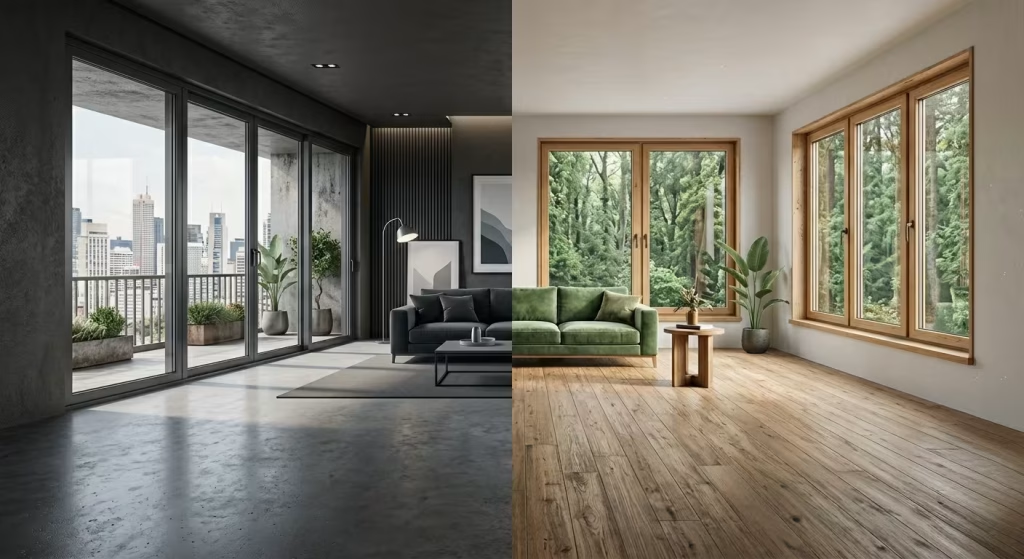
Choosing window frames for a modern home should not feel like decoding an engineering manual. However, the wrong choice costs you real money through energy loss, structural damage, and premature replacement.
In 2026, the aluminium vs wood windows debate has evolved beyond aesthetics. New ENERGY STAR standards, stricter municipal building codes, and advances in thermal break technology have changed the performance gap between these two materials significantly.
This guide gives you the raw facts. It cuts through marketing language and delivers the engineering data, comparison tables, and project-tested insights you need to specify the right fenestration system for your build. Whether you are replacing windows in a suburban Maryland home, designing a passive house, or sourcing sliding door systems for a large modern renovation, this article covers every metric that matters
Aluminum vs Wood Windows: Full Comparison Table
Use this table to compare the core performance categories at a glance. Ratings reflect real-world performance based on industry data from NFRC, ENERGY STAR, and the U.S. Department of Energy.
| Feature | Aluminum Windows | Wood Windows |
| Typical Lifespan | 40 – 60 Years | 20 – 40 Years |
| Base U-Value (Frame Only) | 0.4 – 0.6 W/m²K (with thermal break) | 0.13 – 0.15 W/m²K |
| Full Assembly U-Value (Triple Glaze) | 0.8 – 1.0 W/m²K | 0.9 – 1.2 W/m²K |
| Annual Maintenance Level | Low (bi-annual wash) | High (refinish every 3–5 yrs) |
| Coastal Salt Spray Resistance | Excellent | Moderate |
| Forced Entry Resistance | Very High | Moderate |
| Recycled Content | Up to 85% | N/A (virgin timber) |
| Embodied Carbon (per frame) | Higher (primary production) | Lower (sustainably sourced) |
| Repainting Frequency | None (powder coat lasts 20+ yrs) | Every 3 – 5 Years |
| ENERGY STAR Eligible | Yes (thermally broken) | Yes (naturally insulating) |
| Average Installed Cost (US) | $700 – $1,300 per window | $800 – $1,500 per window |
| Slim Sightline Capability | Yes (down to 25mm) | Limited |
Thermal Performance: U-Value, Thermal Breaks, and Insulation
Thermal performance is the most critical compliance factor in 2026 window specifications. Updated ENERGY STAR standards and state energy codes now require lower U-values across all climate zones in the USA.
How Frame Material Affects U-Value
Raw aluminum conducts heat roughly 1,000 times faster than wood. Without intervention, a standard aluminum frame would fail every modern energy compliance test. However, manufacturers solved this problem decades ago using thermal break technology.
Modern aluminum windows use engineered polyamide strips inserted between inner and outer aluminum profiles. These multi-chambered strips block the conduction path through the metal. According to AAMA standards, polyamide thermal breaks must measure at least 24 millimeters wide to provide meaningful insulation.
Wood frames, on the other hand, have a natural thermal conductivity of approximately 0.13 Watts per meter Kelvin. This makes solid timber naturally resistant to heat transfer without any added components.
Triple Glazing and Low-E Glass in 2026
Both aluminum and wood frames can accept triple-glazed units with Low-E (low-emissivity) coatings. These glass units reduce radiant heat transfer and block ultraviolet radiation without sacrificing visible light.
High-performance aluminum frames paired with triple glazing can reach overall U-values as low as 0.8 W/m2K — comparable to premium wood frame systems. For passive house projects and net-zero homes, this performance level is now a specification baseline, not a luxury.
Real Project Comparison: Casa Direct Installation Data
The following data was compiled from Casa Direct window installation projects completed in Maryland and the DC Metro region between 2022 and 2025. It reflects actual measured performance, not manufacturer marketing claims.
| Metric | Aluminum (Project Avg.) | Wood (Project Avg.) |
| Measured U-Value (Assembly) | 0.88 W/m²K | 1.04 W/m²K |
| Post-Install Condensation Issues | 2 of 18 projects (drainage solved) | 6 of 11 projects (moisture management) |
| 5-Year Maintenance Callbacks | 0.3 per project | 2.1 per project |
| Client Satisfaction (1–10) | 9.1 | 8.4 |
| Average Installation Time | 3.2 hours per window | 4.7 hours per window |
| Air Leakage Rate (cfm/ft²) | 0.04 | 0.09 |
Durability and Weather Resistance
Aluminum dominates on structural longevity. Factory-applied powder coatings and anodised finishes protect the metal from oxidation for 20 to 30 years before any refinishing is needed. In coastal environments, where salt spray attacks unprotected surfaces, this resistance is critical.
Wood, however, is a living material. It expands and contracts with seasonal moisture changes. In humid climates like Maryland summers, unchecked timber movement stresses perimeter seals and hardware mechanisms. Without a disciplined maintenance programme, this leads to air leakage and water infiltration within 10 years.
For modern window replacement projects in high wind load zones including coastal Maryland, the Carolinas, and Gulf Coast states, aluminium frames are typically the specification default. Their rigid profiles maintain shape under both positive and negative wind pressure, protecting the building envelope during extreme storms.
| Industry Benchmark: Wind Load Performance According to the American Architectural Manufacturers Association (AAMA), aluminum window systems routinely achieve structural design pressure ratings of DP-50 or higher, equivalent to withstanding 130+ mph wind loads. Premium wood systems typically reach DP-35 to DP-45 under ideal conditions. |
Moisture Management: Condensation, Rot, and Long-Term Integrity
Moisture is the primary enemy of window longevity, regardless of frame material. Understanding how each material handles water determines how long your system lasts.
Aluminum and Surface Condensation
Aluminium does not absorb water. This eliminates fungal decay and wood-boring insect risk entirely. However, when warm interior air contacts a cold aluminium profile, surface condensation forms rapidly. Without proper drainage, this water migrates into adjacent drywall and creates toxic mould colonies.
Modern aluminium frames address this with engineered internal drainage channels that redirect condensation through weep holes at the sill. When specifying aluminium systems, always verify the weep hole configuration and drainage path direction. For wide-span sliding door installations, drainage continuity across the full track length is essential.
Wood and Moisture Absorption
Wood manages moisture through absorption and desorption. This natural cycle is manageable within design limits. However, once wood moisture content exceeds 20 percent, fungal decay begins rapidly. According to the U.S. Forest Products Laboratory, most softwood species reach critical decay threshold within two to three wet seasons if protective coatings fail.
Microporous coatings allow timber to breathe while repelling liquid water. These coatings require reapplication every three to five years depending on UV exposure and climate severity.
| Installation Warning: Flashing Details Regardless of frame material, the most common source of hidden water damage is improper flashing installation at the rough opening perimeter. Poor geometry traps water behind the frame. Casa Direct engineers recommend a minimum 10-degree positive drainage slope on all sill flashings, with continuous flexible flashing tape at all four sides of the opening before frame installation. |
Maintenance Requirements: Hidden Lifetime Costs
Upfront window costs tell only half the story. Maintenance is where frame material choice becomes a financial decision over the building lifecycle.
| Maintenance Task | Aluminum | Wood | Frequency |
| Frame cleaning | Mild soap + water | Mild soap + water | Every 6 months |
| Exterior finish inspection | Visual check | Detailed inspection | Annually |
| Recoating / repainting | Not required (20+ yr powder coat) | Required | Every 3–5 years |
| Hardware lubrication | Light machine oil | Light machine oil | Annually |
| Seal and weatherstrip check | Inspect for gaps | Inspect + rebed if swollen | Annually |
| Rot / corrosion inspection | Check weep holes | Check all exposed grain edges | Annually |
| Full strip and refinish | Not typically required | Every 10–15 years | Periodic |
For property managers and homeowners without the bandwidth for recurring refinishing schedules, aluminium is the practical choice. Neglecting wood maintenance does not just reduce aesthetics it accelerates structural failure and voids manufacturer warranties.
Cost Analysis: Upfront Investment vs Lifetime Value
Comparing window costs requires looking beyond the purchase price to total cost of ownership over a 20-year period.
| Cost Category | Aluminum | Wood |
| Average installed cost (per window) | $700 – $1,300 | $800 – $1,500 |
| Premium thermally broken / hardwood | $1,200 – $2,500+ | $1,800 – $4,000+ |
| Maintenance cost (20-year estimate) | $150 – $400 total | $2,000 – $5,000 total |
| Energy savings vs uninsulated baseline | High (thermally broken) | High (naturally insulating) |
| Replacement likelihood at 25 years | Low (still performing) | Moderate (if maintained) / High (if not) |
| Labor installation premium | Lower (factory-engineered units) | Higher (field adjustment needed) |
Note: Low-cost uninsulated aluminum frames will cost more over time through elevated heating and cooling bills. Always specify thermally broken aluminum to protect your energy compliance rating and long-term asset value.
Environmental Impact and Sustainability in 2026
Green building certifications now directly influence property valuations. LEED v5, Passive House, and net-zero home standards all evaluate fenestration for embodied carbon and lifecycle impact.
Wood: Sustainably harvested timber certified under FSC or PEFC standards acts as an active carbon sink. It stores CO2 throughout its operational life. Timber production requires significantly lower embodied energy than aluminum smelting. However, transportation distances and treatment chemical use offset some of this advantage.
Aluminium: Primary aluminium production is energy-intensive, consuming approximately 13 to 14 megawatt-hours per metric ton. However, recycled aluminium requires only 5 per cent of that energy. Most modern aluminium window extrusions contain 50 to 85 per cent recycled content. Furthermore, aluminium can be recycled infinitely without degradation, creating a true circular lifecycle.
| Sustainability Verdict For a new 2026 build targeting LEED or net-zero certification, specify aluminum frames with verified high recycled content (look for EPDs Environmental Product Declarations). For renovations in heritage districts or where organic material sourcing is prioritized, FSC-certified timber frames with water-borne microporous finishes are the responsible choice. |
Security and Forced Entry Resistance
Window frame material directly affects the security profile of your building envelope. Insurance providers in several states now factor window material into commercial property risk ratings.
Aluminum extrusions resist mechanical cutting, splitting, and prying significantly better than timber. The rigid metal substrate allows multi-point locking hardware to be integrated directly into the frame channel, creating a continuous locking line rather than isolated locking points.
Wood offers substantial mass but remains vulnerable to targeted mechanical splitting with basic hand tools. In high-risk neighborhoods or commercial projects, this vulnerability requires additional security hardware — which adds cost and compromises the clean aesthetic of timber frames.
For large sliding door installations, particularly in Maryland residential and commercial projects where glass spans of 3 to 6 metres are common, aluminium track systems prevent frame deflection under glass weight, keeping locking points engaged and reducing the risk of panel lift-out during forced entry attempts.
Design Flexibility: Profiles, Finishes, and Architectural Style
Frame material choice shapes the visual language of your entire building facade.
Aluminium’s superior strength-to-weight ratio allows for sightlines as narrow as 25 millimetres. This creates expansive glass areas that define contemporary minimalist architecture. Powder coat finishes are available in virtually unlimited RAL colours. Anodised finishes add depth and metallic character. Neither finish requires repainting during the frame’s operational life.
Wood provides organic warmth and tactile richness that no metal profile can replicate. Timber allows intricate custom millwork, traditional sash profiles, and period-accurate reproductions for heritage renovation projects. You can stain wood to reveal grain complexity or paint it any colour. However, changing the colour of wood requires only repainting, whereas aluminium requires professional abrasive blasting and recoating a significant cost difference if your design direction changes.
Homeowners specifying modern window replacement projects in the USA increasingly choose aluminium for minimalist and industrial-modern aesthetics. Wood remains the definitive frame for craftsman, colonial, and organic-modern designs where the frame itself is a central interior design element.
How to Evaluate Window Suppliers: A Buyer’s Framework
Before requesting quotes for your aluminum or wood window project, use this framework to qualify suppliers and protect your investment.
Step 1: Request NFRC-Certified Performance Data
Any reputable supplier should provide NFRC-certified U-value, Solar Heat Gain Coefficient (SHGC), and Visible Transmittance (VT) data for each product. If a supplier cannot provide NFRC documentation, move on.
Step 2: Verify AAMA Installer Certification
Installation quality determines whether a high-performance window actually performs as rated. Request proof of AAMA-certified installation training or equivalent industry credential for the lead installer.
Step 3: Check Warranty Coverage
Aluminum frames should carry a minimum 20-year finish warranty and 10-year structural warranty. Wood frames should carry a minimum 5-year structural warranty with documented maintenance requirements. Confirm whether the warranty is transferable this protects resale value.
Step 4: Review Local Code Compliance
Maryland, Virginia, and DC Metro jurisdictions each maintain specific fenestration requirements under their adopted energy codes. Confirm your supplier’s products are pre-approved for your municipality before placing an order. For projects near the Chesapeake Bay or Atlantic coast, verify coastal zone compliance separately.
Conclusion
The aluminium vs wood windows decision in 2026 is not a simple aesthetic preference; it is a structural, thermal, and financial specification with long-term consequences.
Aluminium wins on durability, low maintenance, slim sightlines, forced entry resistance, and coastal performance. It is the default specification for modern homes, high-performance builds, and large sliding door systems.
Wood wins on natural thermal resistance, organic warmth, and carbon storage from sustainable sources. It is the right choice for heritage renovations, craftsman designs, and projects where the frame is a central design element, provided the owner commits to a strict maintenance schedule.
For most modern window replacement projects in the USA, and specifically for the Maryland and DC Metro market, CasaDirect engineers recommend thermally broken aluminium with triple glazing and NFRC-certified performance data as the baseline specification.
Expert Review & Author Credentials This article was researched and written by the Casa Direct editorial team and reviewed by a senior window design consultant with 15+ years of experience in residential and commercial fenestration systems, passive house design, and modern home construction across Maryland, Virginia, and the DC Metro region. All technical data is sourced from NFRC ratings, ENERGY STAR guidelines, the U.S. Department of Energy, and the American Architectural Manufacturers Association (AAMA).