
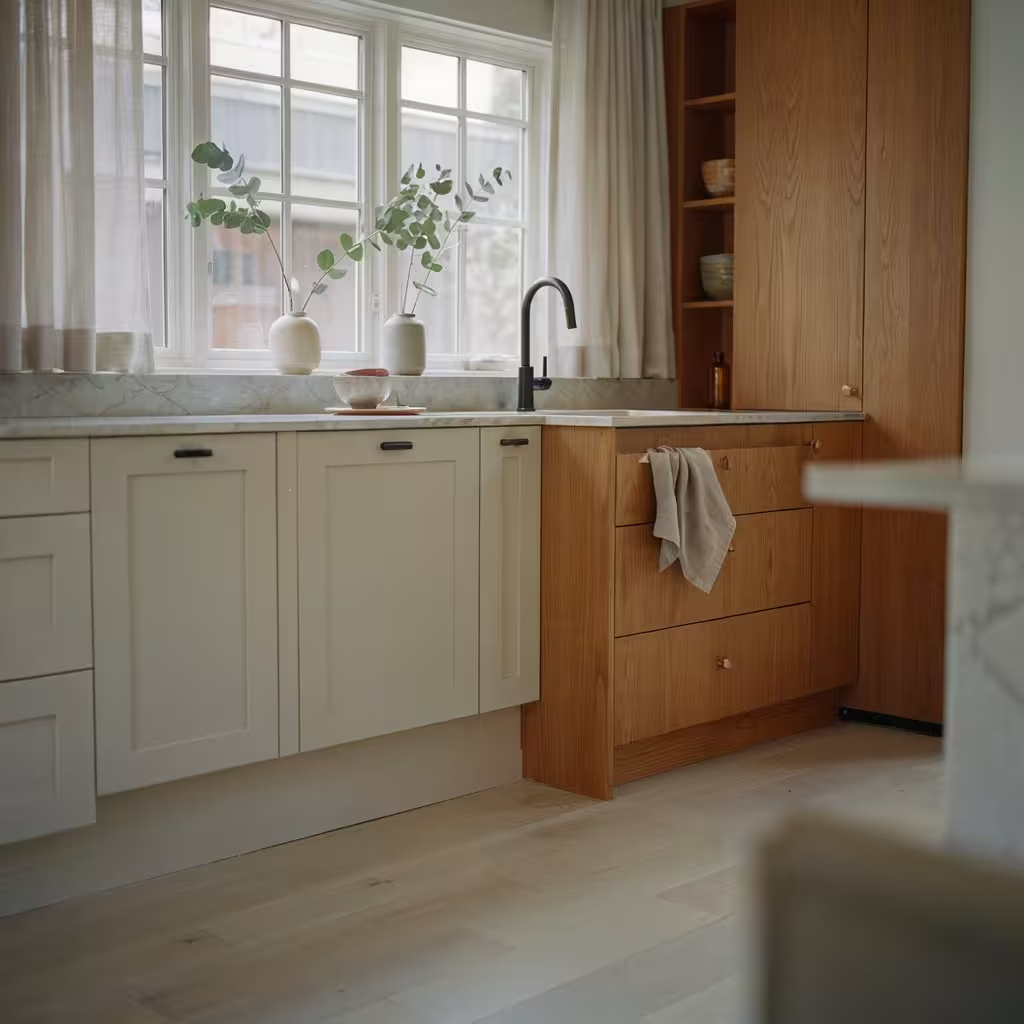
Choosing between shaker vs slab cabinets is one of the biggest decisions you’ll make during a kitchen remodel, and it’s easy to see why homeowners get stuck on it. Both styles dominate kitchen design boards right now, but they solve different problems and suit different lifestyles. Shaker cabinets bring a framed, recessed panel that feels warm and classic, while slab cabinets use one flat surface for a clean, contemporary look.
This guide breaks down shaker vs slab cabinets across cost, durability, style, resale value, and maintenance, so you’re not just picking a trend you’re picking the right cabinet for how you actually cook, clean, and live. By the end, you’ll have a clear side-by-side comparison, real pricing ranges, a decision checklist, and answers to the questions most buyers forget to ask before they order.
What Are Shaker Cabinets?
Kitchen cabinet styles come and go, but shaker vs slab cabinets are the two options homeowners keep coming back to, year after year, because they cover both ends of the design spectrum.
Shaker cabinets get their name from the Shaker religious community, a group known for valuing function over decoration. The door itself is built from five pieces: four flat frame pieces (called rails and stiles) that surround a slightly recessed center panel. That small recess is what gives shaker cabinets their signature depth and shadow line.
This construction method is why shaker cabinets work in almost any kitchen. They read as traditional in a farmhouse kitchen, transitional in a mixed-material space, and even modern when painted in a bold, matte color. If you want a cabinet door that won’t look dated in ten years, a shaker is usually the safer starting point.
What Are Slab Cabinets?
Slab cabinets, sometimes called flat panel cabinets, are built from a single flat piece of material with no frame and no recessed centre. There’s nothing to catch the eye except the material itself, whether that’s a painted MDF surface, a wood veneer, or a high-gloss laminate.
Because slab cabinets have no ornamentation, the finish does all the work. A high-gloss white slab door looks sleek and European. A rift-cut oak slab door looks warm and Scandinavian. This is part of why slab cabinets have become the go-to for modern kitchen cabinets and minimalist renovations over the last few years.
Shaker vs Slab Cabinets: Key Differences at a Glance
Instead of reading through paragraphs to piece together the differences, here’s a direct, side-by-side breakdown of shaker vs slab cabinets so you can compare them at a glance.
| Feature | Shaker Cabinets | Slab Cabinets |
| Door Construction | Five-piece frame with recessed center panel | One flat, uninterrupted panel |
| Visual Style | Classic, transitional, textured | Modern, minimalist, sleek |
| Typical Material | Solid wood, wood composite | MDF, plywood, laminate, wood veneer |
| Average Cost | Moderate to high | Budget to moderate (higher for solid wood/high-gloss) |
| Cleaning Effort | Slightly more, due to grooves | Very low, flat surface wipes clean |
| Best For | Traditional, farmhouse, transitional kitchens | Contemporary, Scandinavian, mid-century kitchens |
| Resale Appeal | Broad, appeals to most buyers | Strong in urban and newer-build markets |
| Hardware Pairing | Classic knobs, cup pulls, bar pulls | Slim pulls, edge pulls, push-to-open systems |
Cost Comparison Shaker vs Slab Cabinets
When homeowners search for kitchen cabinet styles, cost is almost always the first filter they apply, and shaker vs slab cabinets is no exception. Price is usually the first question homeowners ask, and the honest answer is it depends on the material, not just the door style.
Shaker cabinets typically cost more per linear foot because the five-piece door needs more labor, more joints, and more material to assemble. Expect to pay a premium if you choose solid hardwood shaker doors over an MDF or engineered-wood version.
Slab cabinets are usually the more budget-friendly option when made from MDF, plywood, or laminate, since a single flat panel is faster and cheaper to produce. That said, this isn’t a hard rule. A high-gloss lacquer slab door or a solid wood veneer slab can cost just as much, or more, than an entry-level shaker door.
Rough Starting Price Tiers (Per Linear Foot)
- Stock MDF slab cabinets: the most budget-friendly entry point
- Stock shaker cabinets (paint-grade): mid-range pricing
- Semi-custom shaker or slab cabinets: mid to upper range, depending on material
- Custom solid wood shaker or high-gloss slab cabinets: premium pricing
The takeaway: don’t choose shaker vs slab cabinets based on style assumptions about price. Get a quote on the actual material and finish you want, since that number moves more than the door profile does.
Durability, Materials & Maintenance
Durability is another area where shaker vs slab cabinets diverge in practical, everyday ways. Both shaker and slab cabinets hold up well over time when built from quality materials, but they age differently.
Shaker cabinets, thanks to their framed construction, tend to resist warping and handle humidity changes well, especially when made from solid wood or a stable composite. The tradeoff is the recessed panel, which can trap dust, grease, and grime along the grooves. A soft brush or microfibre cloth every couple of weeks keeps them looking sharp.
Slab cabinets are the lower-maintenance option day to day. With no grooves or seams, a damp cloth and a non-abrasive cleaner handle almost everything. The catch is that flat surfaces show every fingerprint, smudge, and uneven hinge alignment, so installation precision matters more with slab cabinets than with shaker cabinets.
Quick Maintenance Tips for Both Styles
- Wipe spills immediately to prevent staining, especially near the stove
- Avoid abrasive sponges or harsh chemical cleaners on painted finishes
- Use furniture wax or manufacturer-approved polish on wood finishes twice a year
- Check hinges and hardware every few months and tighten as needed
- Keep kitchen humidity between 35-50% to protect solid wood doors
Style Compatibility Which Kitchen Layout Fits Each Style
Not every kitchen suits every cabinet style, and this is where a lot of buyers get shaker vs slab cabinets wrong. Matching shaker vs slab cabinets to your actual floor plan matters more than chasing whatever look is trending online.
Shaker Cabinets Shine In:
- Farmhouse and cottage kitchens
- Transitional kitchens mixing old and new elements
- Traditional kitchens with crown molding or ornate trim
- Kitchens where you want warmth without going fully ornate
Slab Cabinets Shine In:
- Small kitchens, since flat surfaces visually open up tight spaces
- Open-concept layouts where cabinets need to disappear into the wall
- Scandinavian, mid-century modern, and coastal-contemporary kitchens
Kitchens built around bold hardware or a statement backsplash
Pros and Cons of Shaker Cabinets
Pros
- Timeless design that rarely looks dated
- Works in traditional, transitional, and modern spaces
- Sturdy, framed construction resists warping
- Broad resale appeal across most buyer types
- Easy to customize with paint, stain, and hardware
Cons
- Higher price point than basic slab cabinets
- Recessed panel needs slightly more frequent cleaning
- Heavier doors may need reinforced hinges on upper cabinets
Pros and Cons of Slab Cabinets
Pros
- Sleek, minimalist look suited to modern kitchen cabinets
- Very easy to clean, with no grooves to collect grime
- Often more affordable in MDF or laminate finishes
- Makes small kitchens feel larger and more open
- Pairs beautifully with bold, statement hardware
Cons
- Every fingerprint and smudge shows on the flat surface
- Installation must be precise, or misaligned hinges are obvious
- Lower-density MDF versions can be prone to edge damage over time
- Can feel too plain in traditional-style homes without added texture
Resale Value & Long-Term Investment
Resale value is often the tiebreaker in the shaker vs slab cabinets decision, especially for homeowners who aren’t planning to stay forever. When it comes to resale value, shaker cabinets have the track record. Their timeless design appeals to a wider range of buyers, which matters if you’re renovating with a future sale in mind. Real estate agents often point to white or light-painted shaker cabinets as a safe, broadly appealing choice.
Slab cabinets are catching up fast, though, particularly in urban markets and newer developments where buyers actively want a modern, move-in-ready look. If your home is in a contemporary neighborhood or you’re targeting younger buyers, slab cabinets can be just as strong an investment.
Either way, the material quality matters more than the door style. A well-built kitchen, whether shaker or slab, holds its value far better than a trendy but poorly constructed one.
Can You Mix Shaker and Slab Cabinets?
Yes, and it’s become one of the most popular moves in modern kitchen design. You don’t have to pick a single winner in the shaker vs slab cabinets debate. Mixing shaker vs slab cabinets in the same kitchen lets you get the warmth of one style with the clean lines of the other.
Popular Combinations
- Slab upper cabinets with shaker base cabinets, for a lighter, airier feel up top
- Shaker cabinets on the perimeter with a slab-front kitchen island as a focal point
- Two-tone kitchens pairing a painted shaker perimeter with a wood-veneer slab pantry wall
- Slab cabinets in the kitchen with shaker cabinets in an adjoining butler’s pantry or laundry room
This hybrid approach is a great answer if you genuinely can’t choose between shaker vs slab cabinets. It also lets you test a slab accent without committing your whole kitchen to a single, permanent look.
How to Choose: A Quick Decision Checklist
Still torn on shaker vs slab cabinets? This is usually where kitchen cabinet styles start to feel overwhelming, so run through this checklist before you order:
- Budget: If cost is the deciding factor, MDF slab cabinets usually win. If you want longevity in solid wood, budget for shaker.
- Kitchen size: Small kitchen, lean slab. Larger kitchen with more architectural detail, shaker holds its own.
- Cleaning habits: Busy household with kids or heavy cooking, slab wipes down faster.
- Home style: Traditional or farmhouse home, go shaker. Contemporary or new-build home, go slab.
- Hardware plans: Love bold pulls and handles, slab gives them a stage. Prefer classic hardware, shaker is the natural fit.
- Resale timeline: Selling within a few years in a traditional market, shaker is the safer bet.
2026 Kitchen Cabinet Trends: Shaker vs Slab
Heading into 2026, neither side of the shaker vs slab cabinets debate is going anywhere, but the details are shifting. Slim shaker profiles, with a narrower rail and stile, are gaining ground for buyers who want shaker’s structure with a more streamlined look. On the slab side, matte and textured finishes are overtaking high-gloss, since they hide fingerprints and feel warmer in daily use.
Two-tone kitchens remain strong, and mixing shaker and slab cabinets in the same space continues to grow as designers look for ways to blend warmth with a modern kitchen cabinets aesthetic. Earthy tones, muted greens, warm walnuts, and soft off-whites are replacing the stark white-and-gray palettes that dominated the last decade, on both shaker and slab doors alike.
Final Thoughts
There’s no universal winner in the shaker vs slab cabinets debate, only the right fit for your kitchen, budget, and lifestyle. Shaker cabinets offer timeless texture and broad resale appeal, while slab cabinets deliver a clean, modern kitchen cabinets look with minimal upkeep. Whichever direction you lean, prioritize material quality over trend, since a well-built cabinet in either style will outlast the fashions that come and go around it. When you weigh shaker vs slab cabinets against your own budget, layout, and cleaning habits, the right choice tends to become obvious fast.