
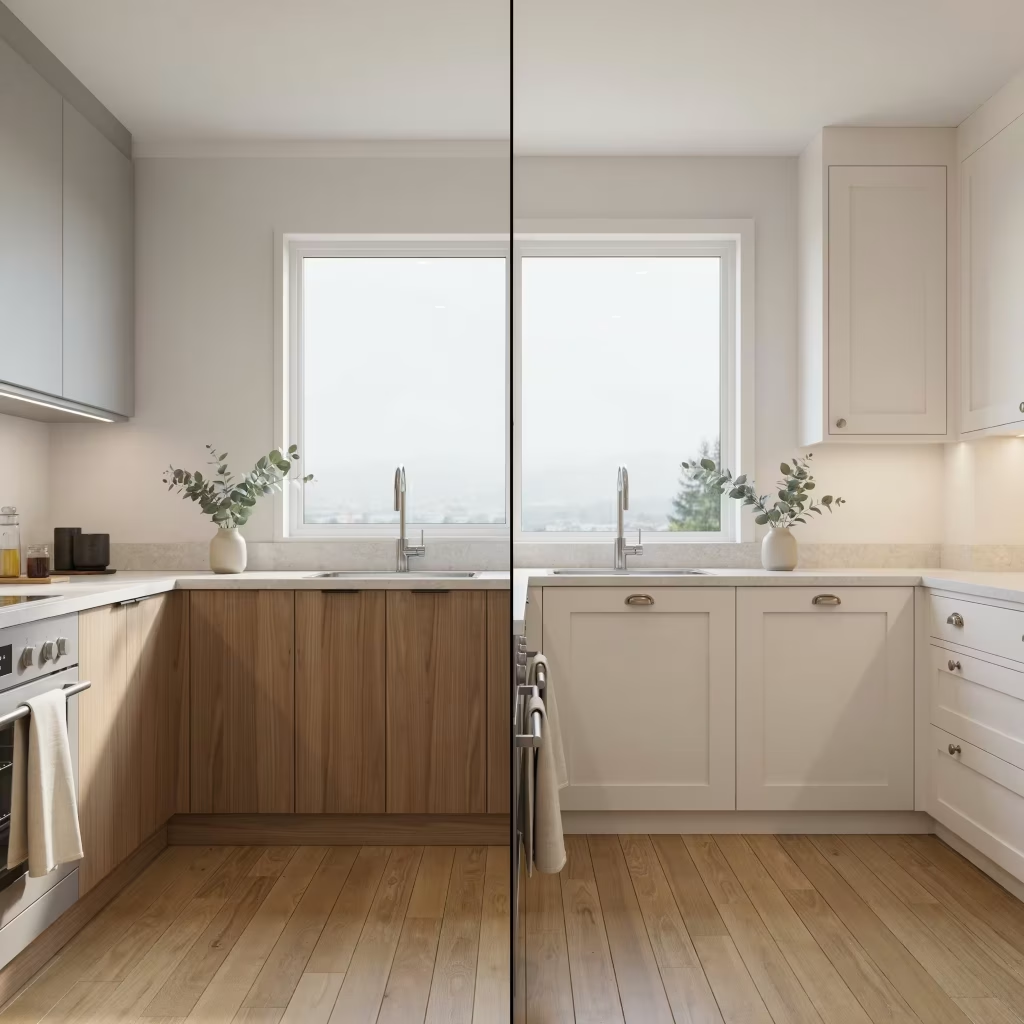
Quick answer: European kitchen cabinets are frameless boxes with full-overlay doors, concealed hinges and a clean, flat look. American cabinets usually have a face frame, which adds a traditional look and more forgiving installation but slightly reduces usable opening space. For most modern kitchens, European-style frameless cabinets are the better fit. For older homes with uneven walls or a traditional style, framed cabinets can be the smarter choice.
Choosing between European kitchen cabinets and American-style cabinets is one of the first big decisions in a remodel, and it shapes how your kitchen looks, works and costs. The terms sound like they describe where cabinets are made, but they really describe how cabinets are built. This guide explains the real differences in construction, door styles, hardware, storage, cost and installation, so you can choose with confidence instead of guessing from a showroom photo.
What Are European Kitchen Cabinets?
European kitchen cabinets are built without a face frame. The cabinet box is a simple enclosure, and the doors cover the entire front. Because nothing sits in front of the box, you see a smooth, uninterrupted surface with thin, even gaps between doors and drawers.
Key traits include:
- Frameless construction (also called full-access cabinets)
- Full-overlay doors that cover the box edges
- Concealed hinges that adjust in three directions
- Flat-panel or slab doors in most modern lines
- Adjustable legs and a toe-kick plinth for leveling
One important point: “European” describes the style and construction method, not always the country of manufacture. Many U.S. and Canadian makers build European-style frameless cabinets, and some imported lines are sold in American sizes. Always confirm dimensions, materials and warranty rather than assuming the label tells the full story.
What Are American Kitchen Cabinets?
Traditional American cabinets are framed cabinets, also known as face frame cabinets. A solid-wood frame, usually about an inch and a half wide on the front edge, is attached to the box. Doors then mount to that frame in one of three ways: inset (flush inside the frame), partial overlay (covering part of the frame) or full overlay (covering most of it).
The face frame adds strength to the front of the box and gives you a classic look, which is why it remains popular for transitional, farmhouse and traditional homes.
European vs American Kitchen Cabinets at a Glance
| Feature | European (frameless) | American (face frame) |
| Front of cabinet | No frame, doors cover the full box | Solid frame on the front |
| Look | Sleek, minimal, modern | Classic, traditional, transitional |
| Interior access | Wider openings | Slightly narrower openings |
| Hinges | Concealed, three-way adjustable | Concealed or exposed, depending on style |
| Door styles | Mostly slab and flat panel | Shaker, raised panel, inset and more |
| Installation | Needs level walls and precision | More forgiving of uneven walls |
| Best for | Modern, condo, compact kitchens | Older homes, traditional design |
Frameless vs Framed Cabinets: Construction Differences
The frameless vs framed cabinets question comes down to where strength comes from.
Frameless cabinets rely on thick, well-built box panels and solid joinery. Without a frame, the box itself does the structural work, so panel thickness, edge banding and hardware quality matter a great deal.
Framed cabinets get added rigidity from the face frame, which helps the front of the box hold its shape. Slightly thinner box panels are common, but the frame makes the front stable.
Neither method is automatically stronger. A well-built frameless cabinet outperforms a poorly built framed one, and the reverse is also true. Ask any supplier about:
- Box material (plywood or engineered board) and panel thickness
- Joinery method (dowels, dado joints or similar)
- Drawer box construction and slide type
- Finish durability and moisture resistance
- Warranty terms and what they cover
Door Styles and Overall Look
Door style is where many homeowners feel the difference most.
European kitchen cabinets are known for flat slab doors in matte lacquer, wood veneer, laminate or textured finishes. The look is clean, with no profile or detail to catch dust. Handle-free designs with integrated pulls or push-to-open hardware are common in this category.
American cabinets offer a wider range of traditional profiles: Shaker, raised panel, beadboard and inset doors. That variety suits character homes and warm, classic interiors.
But the line is not strict. Many frameless lines now include Shaker doors, and many framed lines offer slab fronts. If you are stuck between those two door styles, our shaker vs slab cabinets guide compares them in detail
Hardware: Hinges, Drawers and Handles
Hardware affects how your kitchen feels every day.
- Hinges: Frameless cabinets typically use concealed, soft-close hinges that adjust up and down, left and right, and in and out. This makes it easier to align doors perfectly.
- Drawers: Full-extension, soft-close slides are common in modern frameless lines and increasingly available in framed lines too.
- Handles: Slab doors often pair with edge pulls, channel pulls or minimal bars. Framed styles often use knobs and cup pulls.
- Lift and pocket systems: Modern frameless layouts often include specialty hardware for tall pantries, appliance garages and hidden storage.
The best hardware is the kind you will not notice: smooth, quiet and consistent. Check sample drawers in person or request hardware specifications before you order.
Storage Efficiency: What You Actually Gain
Storage is a major reason people choose European kitchen cabinets. Without a face frame, the opening is wider, so drawers can be wider and items are easier to reach. The difference is often an inch or two of opening width on each cabinet, which adds up across a full kitchen.
Practical benefits of frameless storage include:
- Wider drawers that fit larger pots and pans
- Easier access to the back corners of lower cabinets
- Cleaner interior organizers, since inserts fit more precisely
- Better use of small kitchens, where every inch counts
Framed cabinets still offer plenty of storage and can be perfectly practical. The gain from frameless is real but modest, so it matters most in compact or tightly planned kitchens rather than large ones with abundant storage.
Kitchen Cabinet Cost: European vs American
Kitchen cabinet cost depends far more on the tier, materials and finish than on frame type alone. In general:
- Imported European lines can cost more because of shipping, duties and longer lead times.
- U.S.-made frameless cabinets are often priced similarly to comparable framed lines in the same tier.
- Stock framed cabinets usually sit at the lowest entry point, while custom work in either style sits at the top.
- Premium finishes such as high-gloss lacquer, real wood veneer or textured surfaces raise the price in both categories.
Region also matters. Labor rates, delivery costs and local availability vary by city and state, and installers in some markets are more experienced with frameless systems than others. Always compare itemized quotes from at least three suppliers. Our factory-direct vs showroom guide explains how buying channels affect price, service and lead time.
For a broader look at budgeting, see our companion article on modern kitchen design cost.
Installation: Where Frameless Needs More Care
Installation is the area where the two styles differ most in practice.
Frameless cabinets need level floors and plumb walls, or careful shimming and leveling. Because doors sit tight together with small gaps, small errors show. A skilled installer who has worked with European kitchen cabinets before makes a real difference.
Framed cabinets are more forgiving. The face frame can be scribed to an uneven wall, and small alignment errors are easier to hide.
This is why older homes, with settled floors and wavy walls, sometimes work better with framed cabinets, while new builds, condos and gut remodels suit frameless layouts well.
Pros and Cons Summary
European kitchen cabinets
- Pros: sleek look, wider openings, easy-to-adjust hinges, strong fit with modern design
- Cons: less forgiving of uneven walls, fewer traditional door profiles, imported lines may have longer lead times
American framed cabinets
- Pros: classic look, forgiving installation, wide range of door styles, familiar to most local installers
- Cons: slightly narrower openings, frame lines may feel less seamless in a minimalist design
How to Choose: A Step-by-Step Process
Use this simple process to pick the right style for your home:
- Define your design style. Modern and minimal points toward frameless. Traditional or farmhouse points toward framed.
- Check your walls and floors. Uneven surfaces favor framed cabinets or require extra prep for frameless.
- Measure your storage needs. Compact kitchens benefit most from the extra interior space.
- Set a budget by tier. Compare stock, semi-custom and custom options within each style.
- Ask about construction details. Box thickness, joinery, hinges and warranty matter more than the label.
- Confirm installer experience. Ask for examples of frameless installations if you choose European kitchen cabinets.
- Review a 3D layout. Seeing doors, handles and proportions in 3D helps you judge the real look before you order.
Common Myths About European Kitchen Cabinets
- Myth: They are always imported. Many are made in North America.
- Myth: They are always more expensive. Price depends on tier, finish and supplier.
- Myth: They are less sturdy. Quality depends on construction, not frame type.
- Myth: They only come in slab doors. Many lines offer Shaker and other profiles.
Final Thoughts: Choosing European Kitchen Cabinets
European kitchen cabinets offer a clean, modern look, wider interior access and precise hardware, while American framed cabinets offer a traditional look and easier installation in imperfect spaces. The best choice depends on your home, your style, your budget and your installer. Focus on construction quality, hardware and a clear layout plan rather than the label