
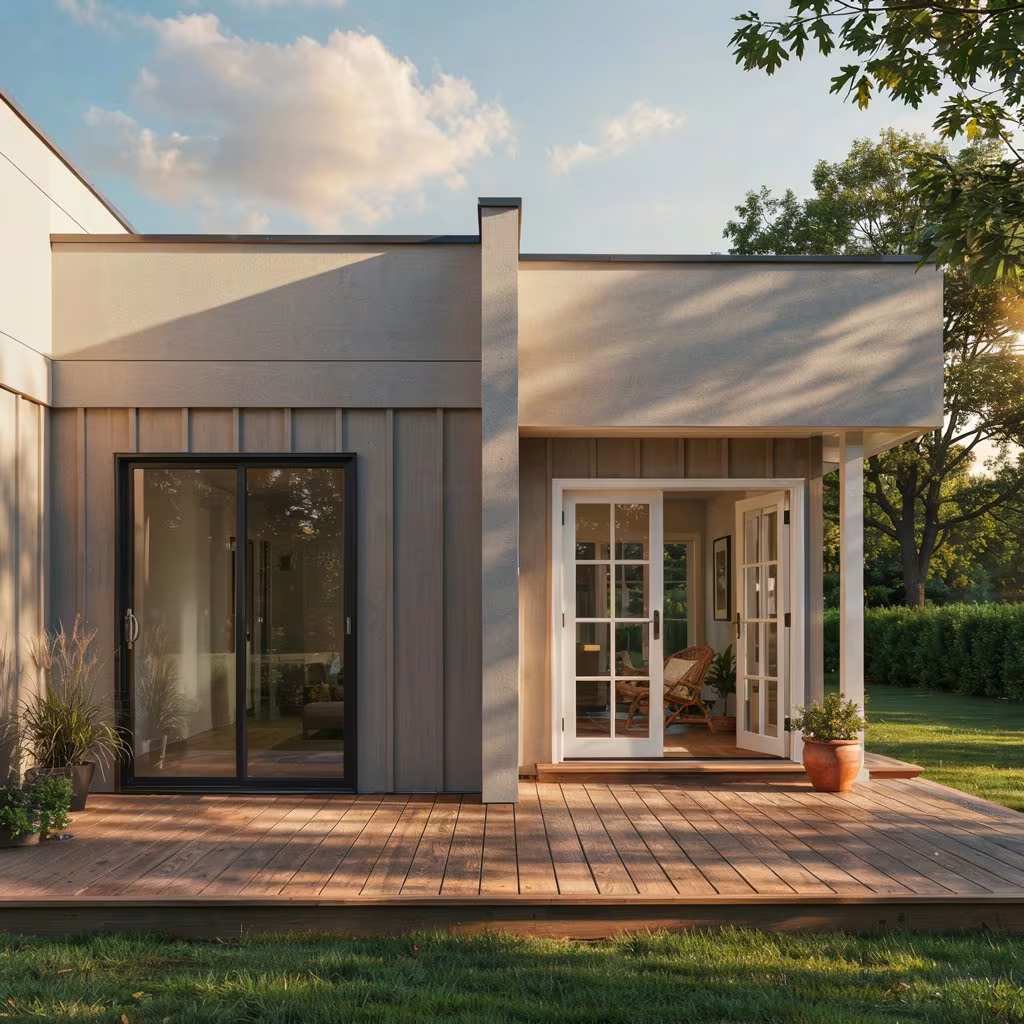
Sliding Glass Doors vs French Doors is one of the first decisions homeowners across Maryland face the moment they start planning a patio, sunroom, or backyard renovation. Whether you live in a colonial in Howard County, a rancher in Anne Arundel County, or a rowhouse in Baltimore City, the door you pick will shape how your home looks, how much you spend on heating and cooling, and how well it holds up against Maryland’s humid summers and icy winters. This guide breaks down sliding glass doors vs French Doors from every angle that matters in 2026 and 2027, including cost, energy performance, security, and long-term maintenance, so you can walk into your next patio door replacement quote with confidence.
At Casa Direct USA, we get asked about this comparison almost every week, and the honest answer is that neither style wins outright. The right choice depends on your home’s layout, your budget, and how you actually plan to use the space. Below, we’ll walk through both door types in plain language, compare them side by side, and share the kind of practical tips our installers give homeowners in Montgomery, Prince George’s, Baltimore, and Howard County every single day.
What Are Sliding Glass Doors?
A sliding glass door is a large glass panel that glides horizontally along a track instead of swinging open on hinges. Most residential models pair one fixed panel with one operable panel, though three- and four-panel configurations are common on larger openings. Because the glass dominates the frame, sliding doors flood a room with natural light and give an almost uninterrupted view of the backyard.
Pros of Sliding Glass Doors
- Space-saving operation. Since the panel glides instead of swinging, sliders work well on tight decks, small patios, or rooms where furniture sits close to the opening.
- Bigger, clearer views. Larger glass panels mean less visual interruption, which is a major draw for homeowners who want an indoor-outdoor feel.
- Tighter seals in newer models. Modern sliders overlap at the frame and use interlocking weatherstripping, which generally helps them resist drafts better than older designs.
- Simple day-to-day use. One smooth motion opens or closes the door, which matters for households with kids, pets, or anyone carrying groceries through the back.
Cons of Sliding Glass Doors
- Narrower walk-through opening. Even on a 6-foot door, only about half the width is usable, since one panel always stays fixed.
- Track upkeep. Dirt, pollen, and leaf debris collect in the track and need regular cleaning, or the door starts to stick.
- Lock quality varies. Entry-level sliders rely on a simple latch, so it’s worth upgrading to a multi-point lock or auxiliary foot bolt for real security.
What Are French Doors?
French doors are a pair of hinged, glass-paned doors that swing open from the center, similar in spirit to a formal entryway. They’re often installed with true divided lites or simulated grilles, which gives them a more traditional, tailored look. Many Maryland homeowners choose French doors for additions, sunrooms, or front-facing spaces where architectural character matters as much as function.
Pros of French Doors
- Wide-open access. When both panels swing back, you get nearly the full width of the opening, which makes moving furniture or hosting a crowd much easier.
- Traditional curb appeal. The divided panes and hinged design read as classic and upscale, particularly on colonial, Cape Cod, and craftsman-style homes common throughout Maryland.
- Better airflow when needed. Opening both panels fully lets in more cross-breeze than a slider’s half-open track.
- More material and hardware choices. Fiberglass, wood-look composites, and steel are all available, along with a wide range of handles, hinges, and finishes.
Cons of French Doors
- Clearance requirements. The doors need open floor space to swing, inside and sometimes outside too, which rules them out for tight patios.
- Higher upfront cost. Between the extra hardware, hinges, and installation labor, French doors typically cost more than a comparable slider.
- Seal quality depends on the build. Center-hinged doors meet in the middle rather than overlapping, so a lower-quality unit can let in more air than a well-built slider.
How Maryland’s Climate Changes the Equation
Temperature swings matter more here than most homeowners expect. Maryland sees humid, sticky summers that push cooling bills up, followed by winters where temperatures regularly dip below freezing and coastal areas deal with wind-driven storms off the Chesapeake Bay. That combination puts real stress on any door’s seal, frame material, and glass package.
- Summer humidity: Glass with a low-E coating and argon gas fill reduces solar heat gain, which keeps rooms cooler without forcing your AC to work overtime. Both door styles offer this upgrade, but it matters more on south- and west-facing openings.
- Winter cold and freeze-thaw cycles: Vinyl and fiberglass frames handle Maryland’s freeze-thaw pattern better than aluminum, which can contract and let cold air seep through over time. Sliding doors with insulated, interlocking frames tend to edge out standard French doors here, though premium French doors with compression weatherstripping close that gap.
- Wind and coastal exposure: Homes near the Bay or in storm-prone counties benefit from impact-rated glass and reinforced frames, an option worth asking about regardless of which door style you pick.
- Humidity and wood swelling: Wood-clad doors can swell or stick during Maryland’s muggy months, which is one reason fiberglass and vinyl have become the more popular, lower-maintenance choice for both sliders and French doors.
Sliding Glass Doors vs French Doors: Side-by-Side Comparison
| Factor | Sliding Glass Doors | French Doors |
| Best for | Modern homes, tight spaces | Traditional homes, wide openings |
| Space needed | None glides on track | Swing clearance required |
| Energy efficiency | Slight edge, tighter seal | Strong with quality weatherstripping |
| Security | Good with upgraded locks | Strong with multi-point locks |
| Upfront cost | Generally lower | Generally higher |
| Maintenance | Track cleaning | Hinge & seal checks |
Aesthetics and Style
Sliding doors suit contemporary, modern, and mid-century homes where large, unbroken glass panels fit the architectural language. French doors lean traditional and work naturally with colonial, farmhouse, and craftsman exteriors, though manufacturers now offer sleeker, minimal-grille versions that fit modern builds too.
Space Efficiency
If your patio, deck, or interior layout is tight, a sliding door is almost always the practical pick since it needs zero swing clearance. French doors need several feet of open floor space on the side they swing toward.
Energy Efficiency
Both styles can reach strong performance numbers when built with low-E glass, argon fill, and quality weatherstripping. As a general rule, sliding doors edge ahead on air-tightness because their overlapping frame design resists infiltration, while French doors depend heavily on the quality of the center seal and compression strips.
Security
French doors, when fitted with a multi-point lock and a non-removable hinge pin, are traditionally considered the more secure option because they behave like a true door rather than a track-mounted panel. Sliding doors can match that security level with add-ons like secondary track locks, laminated glass, and anti-lift blocks, but budget models without these features are more vulnerable.
Cost and Installation
Sliding glass doors are generally the more budget-friendly option upfront, with simpler installation and fewer moving hardware parts. French doors cost more due to the hinges, multi-point locks, and added labor, but many homeowners feel the added architectural value and resale appeal justify the difference.
Maintenance
Sliding doors need periodic track cleaning to stay smooth, especially with Maryland’s pollen season and fall leaf drop. French doors need occasional hinge lubrication and seal inspection, particularly after a harsh winter.
Sliding Glass Doors vs French Doors in 2026 and 2027: What’s Changing
The patio door market is shifting quickly, and a few trends are worth knowing before you buy.
- Smarter locking hardware. Keyless entry, app-controlled locks, and sensor-based security are becoming standard add-ons on both door types heading into 2027, not just premium upgrades.
- Bigger glass, thinner frames. Manufacturers keep shrinking frame sightlines on sliding doors, which is pushing them further into spaces once reserved for French doors when views are the priority.
- Tighter energy codes. Maryland’s push toward stricter energy standards means more buyers are asking for double- or triple-pane glass with certified U-factor ratings, which affects pricing on both styles.
- Material shifts. Fibreglass continues to gain ground over vinyl and wood for French doors specifically, since it holds paint, resists warping, and handles temperature swings without much upkeep.
- Material cost volatility. Ongoing shifts in the cost of aluminum, glass, and fiberglass components mean pricing on both door types can move from one quarter to the next, so getting a current, written quote matters more than relying on last year’s numbers.
Which Door Is Right for Your Maryland Home?
There’s no universal winner in the Sliding Glass Doors vs French Doors debate, but a few questions usually point homeowners in the right direction:
- Do you have space for the doors to swing open, inside and out? If not, lean sliding.
- Is the opening a main gathering entrance where you want the whole width usable? French doors typically win here.
- Is your home traditional in style, like a colonial or Cape Cod? French doors tend to match better. Is it a modern build or a rear addition facing a big backyard view? Sliders usually fit better.
- What’s your budget ceiling? Sliding doors generally cost less to buy and install.
- How exposed is the opening to direct summer sun or winter wind? That affects which glass package and frame material you’ll want, regardless of style.
How Casa Direct USA Helps Maryland Homeowners Decide
Picking between Sliding Glass Doors vs French Doors isn’t just a style call, it’s a decision that affects your energy bills, your home’s resale value, and how the space actually gets used for years to come. That’s where having a local team matters. Casa Direct USA works with homeowners across Maryland to measure the actual opening, walk through sun exposure and wind direction, and recommend a frame material and glass package suited to that specific spot on the house, not a one-size-fits-all answer.
A few ways our approach differs from a standard sales visit:
- We measure for performance, not just fit. Our team checks orientation, shade coverage, and existing insulation before recommending a glass package, so you’re not overpaying for performance you don’t need or underbuying for a sun-drenched wall.
- We explain trade-offs honestly. If a slider makes more sense for your layout even though you originally wanted French doors, we’ll tell you that upfront, along with ways to get a similar look with a slim-frame slider.
- Installation is handled by trained local crews. Poorly installed doors, regardless of brand or style, are the number one cause of drafts and early seal failure, so correct flashing, shimming, and sealing matter as much as the product itself.
- We stand behind the work. Written warranties on both the product and the installation labor mean you’re covered if something needs adjustment after the first Maryland winter puts it to the test.
Expert Tips Before You Buy
- Get exact opening measurements before comparing quotes; standard sizes vary between manufacturers, and a mismatch adds cost.
- Ask for the door’s U-factor and Solar Heat Gain Coefficient, not just a general “energy efficient” claim.
- If you’re near the Bay or in a storm-prone county, ask specifically about impact-rated glass options.
- Compare installed price, not just the door price — labor, disposal of the old unit, and any framing repairs can shift the total significantly.
- Walk through how each lock mechanism actually works in the showroom. A locking system that feels flimsy in person usually stays flimsy after installation.
Final Thoughts
When it comes down to Sliding Glass Doors vs French Doors, the better choice is the one that fits your home’s layout, your climate exposure, and how you’ll actually use the space, not just which one looks better in a photo. Sliding doors win on space efficiency, simpler operation, and typically lower cost. French doors win on wide-open access, traditional style, and a certain architectural warmth that’s hard to replicate. Both can perform well through Maryland’s humid summers and cold winters when built with quality glass, the right frame material, and a careful installation.
If you’re planning a patio door replacement in Maryland and want a straight answer on which option fits your home, Casa Direct USA is ready to help. Contact us today for a free, no-pressure quote and a walkthrough of the door options that actually make sense for your space.