
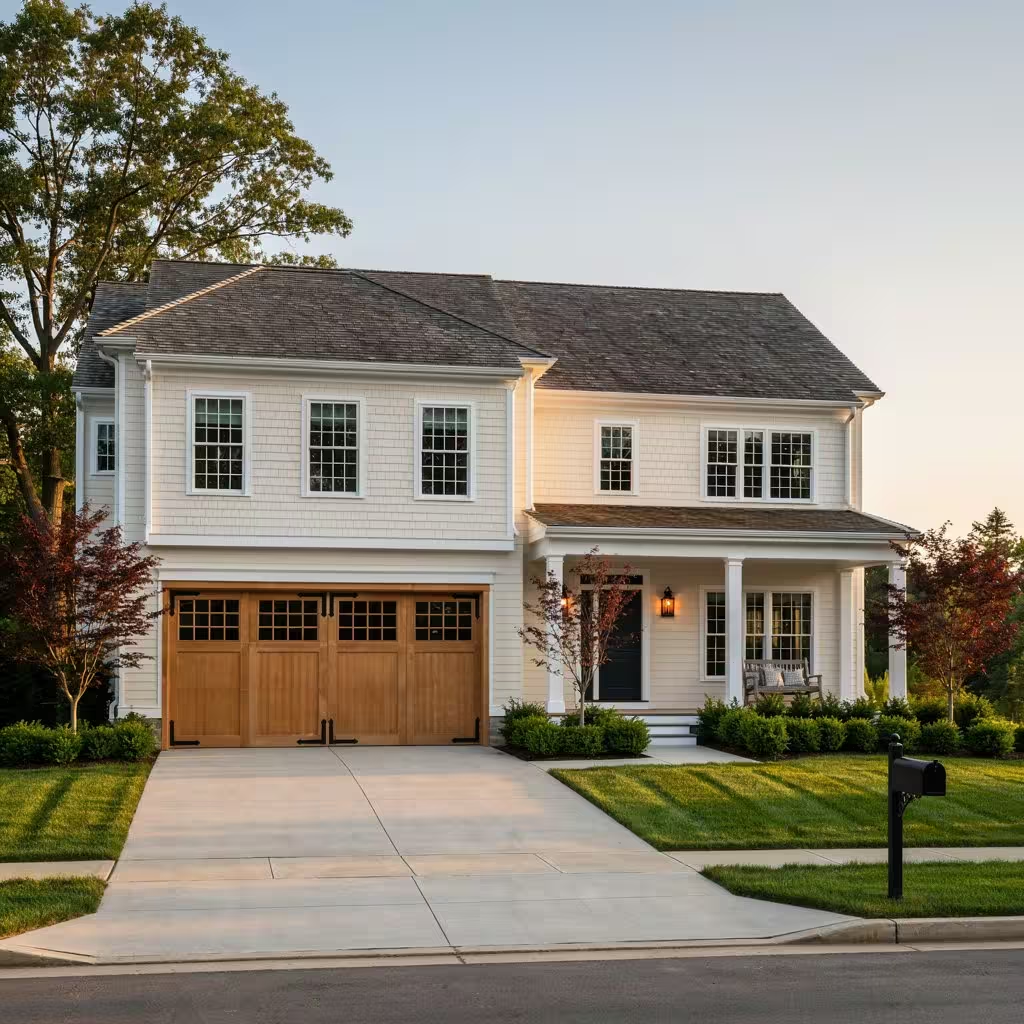
Think your garage door is just a garage door? Carriage house styles look simple until you start buying one. Then the paperwork, wind ratings, and HOA rules show up all at once. Let’s make sure you know what you’re getting before you sign anything.
What Are Carriage House Garage Doors?
Carriage house garage doors look like the swinging wooden doors on old horse barns. They have vertical or horizontal panels, decorative hinges, and often a windowed top section. Today’s versions are usually steel or insulated fiberglass with a wood-look finish. You get the historic charm without the drafts and rot.
The real appeal sits in the design details. Faux hardware, recessed panels, and arched windows give a home curb appeal that standard roll-up doors can’t match. Most homeowners pick them for resale value, and many builders use them on Craftsman, Colonial, and farmhouse exteriors. Before you order, measure your opening twice. Standard widths run 8, 9, or 16 feet, and a custom opening may need a custom panel size.
Check your local building codes and HOA rules before ordering. Some neighborhoods require a specific color palette or door style, and a permit may be needed if you change the opening size. Missing one of these steps can cost you more than the door itself.
Types of Carriage House Garage Doors
You’ll mostly run into three types. Sectional carriage house doors are the most common. They roll up in tracks along the ceiling, so they don’t swing into your driveway. Swing-out doors open outward like traditional barn doors, which works well for narrow driveways but needs clear space in front. Top-hinged, or tilt-up, models are less common, but they work with low-clearance garages.
Pay attention to the track system when you compare sectional models. Standard lift tracks need about 12 inches of headroom. Low-headroom kits can work in tighter garages, though they cost more. Ask the installer for a clearance check before you commit. A door that won’t fit the space is the most expensive mistake in this category.
Insulation rating is the other key spec. Look for an R-value listed by the manufacturer. Single-layer steel doors usually land near R-4, while insulated double-layer models can reach R-16 or higher. If the garage is attached to living space, a higher R-value makes a noticeable difference in heating and cooling bills.
Benefits of Carriage House Garage Doors
The biggest benefit is curb appeal. Industry surveys from home improvement sources consistently rank garage door replacement among the highest-return exterior upgrades, often cited near 90 per cent cost recovery at resale. Verify current figures from the latest Remodeling Cost vs. Value report before quoting them to clients.
Durability is another win. Modern carriage house doors use galvanised steel skins, polyurethane insulation, and reinforced frames. Many come with wind load ratings for coastal or storm-prone areas. Look for a wind rating printed on the product certificate, and confirm it matches your local design wind speed requirements.
Security improves too. Reinforced steel construction and rack-resistant locking hardware make forced entry harder. Pair the door with a smart opener that sends alerts when it opens, and you get peace of mind that a standard wooden door can’t deliver. Insulated models also cut noise from the street, which matters for home offices and bedrooms above the garage.
Best Materials for Carriage House Garage Doors
Steel is the workhorse. It resists dents, needs little upkeep, and comes in many wood-look finishes. Choose a model with a 20 to 25 year panel warranty and check that the paint system includes a UV-resistant topcoat. Cheap steel rusts at the edges, so inspect the bottom seal and hardware first.
Fiberglass and composite panels give you the look of real wood without the warping. They handle humidity well, which makes them a strong pick for coastal homes. Compare the density of the material and the thickness of the skin, since thin fiberglass can dent during hail or cart impacts.
Real wood looks the most authentic, but it needs sealing and repainting about every two to three years. Cedar and mahogany resist decay better than pine. Wood works best in dry climates with covered garage approaches. If you go this route, ask the supplier for kiln-dried stock and a finish rated for exterior use.
How Much Do Carriage House Garage Doors Cost?
Costs vary widely by material, size, and insulation. A basic steel carriage house door for a standard two-car opening often runs from about $1,200 to $2,500 for the door alone. Insulated fiberglass or composite models typically sit between $2,500 and $5,000. Solid wood custom doors can exceed $6,000 before installation.
Installation adds cost. Plan for roughly $300 to $800 in labor for a standard replacement, more if you need new tracks, openers, or structural header work. Ask every contractor for a line-item quote that separates door, hardware, opener, and labour. That breakdown makes comparing bids much easier.
Price estimates shift with regional labor rates and material costs. Treat the ranges above as a starting point and confirm current pricing with two or three local installers before budgeting.
How to Choose the Right Carriage House Garage Door
Start with your opening. Measure the width, height, and headroom, then note any obstructions like light fixtures or beams. Next, decide how much you care about insulation. A garage attached to living space benefits from R-12 or higher, while a detached workshop may not need it.
Then match the style to your house. Look at the trim, siding color, and window pattern on your home. A door with divided glass top panels suits a Colonial, while a plain panel design fits a modern farmhouse. Bring sample photos to the showroom, and check how the finish looks in daylight.
Finally, check the warranty and installer. Ask about panel, hardware, and labor coverage separately. A strong warranty from a manufacturer means little if the installer isn’t certified or insured. Verify both before you sign.
Carriage House Garage Door Maintenance Tips
Good maintenance keeps the door quiet, safe, and looking sharp. Every month, test the auto-reverse safety feature by placing a flat object in the door’s path. The door should reverse on contact. If it doesn’t, call a technician right away, because this feature protects people and pets.
Every three to six months, clean the tracks and lubricate the rollers, hinges, and springs with a silicone-based lubricant. Skip grease, since it attracts dirt. Tighten loose bolts and hardware, and check the weatherstripping for cracks. Worn seals let in water and drafts.
Annually, inspect the torsion or extension springs. These carry the door’s weight, and they are under high tension. Do not adjust springs yourself. Call a licensed technician, who has the right tools and training to do the job safely.
Final Thoughts
Carriage house garage doors do more than open and close. They shape how people see your home from the street and how well the space inside holds up over time. Choosing the right material, aluminium vs wood, confirms your measurements, and checking the U.S. Department of Energy: Insulation and R-Value insulation rating puts you in control of the result. Regular maintenance keeps the door quiet, safe, and reliable for years. Take the time to plan, and your garage will look sharp and work hard for a long time.
Ready to Upgrade Your Garage?
Casa Direct Usa helps homeowners find carriage house garage doors that fit their home, budget, and climate. Contact our team today for a free measurement visit and a line-item quote so you can compare options with confidence.