Quick answer: Shaker cabinets have a five-piece door with a flat center panel inside a square frame. They suit farmhouse, transitional and modern kitchens, usually cost about the same as other mid-range door styles, and take paint and stain well. For the best result, choose plywood boxes, check the joinery and match the door finish to your countertop. Use plywood or well-sealed doors near the sink, and compare written quotes that list the same materials.
Nobody falls in love with cabinet hinges, but you’ll curse them the day one snaps. Shaker cabinets look simple, and that simplicity hides a lot of decisions.
CasaDirect USA has helped homeowners and builders sort through these choices for years. This guide covers what matters, what shaker cabinets cost, how they compare with other door styles and the mistakes we see most often. Let’s make sure your next kitchen project goes smoothly.
What Are Shaker Cabinets? A Look at Their History and Defining Features
Shaker cabinets take their name from the Shaker communities of the 1700s and 1800s, a religious group known for plain, functional furniture. Their makers valued clean lines and honest craftsmanship, and modern versions keep that spirit.
A classic Shaker door has a flat center panel framed by a square rail and stile. The frame sits on the outer edge of the door, which creates a recessed look and adds subtle depth.
Start your assessment with the door profile, since it shapes the whole look. Then check how the box is built. Solid joinery, such as dovetail drawer boxes and well-built box corners, holds up far better than staples and glue alone. Those details reveal most of what you need to know about quality.
Common Shaker Door Variations
Not every Shaker door looks the same. Small changes to the frame change the mood of the kitchen:
- Standard Shaker: a balanced frame width that works in most homes
- Slim or narrow-rail Shaker: a thinner frame that reads lighter and more modern
- Wide-rail Shaker: a heavier frame with a more traditional or farmhouse feel
- Inset Shaker: doors sit flush inside the cabinet frame for a custom, furniture-like look
- Beaded or detailed Shaker: a small decorative edge adds a classic touch
If you cannot decide, request two sample doors with different frame widths and compare them side by side.
Shaker vs Slab vs Raised Panel Cabinets
Many buyers are really choosing between three door styles. Here is how they compare:
| Feature | Shaker | Slab (flat) | Raised panel |
| Look | Clean, versatile, timeless | Sleek, minimal, modern | Traditional, ornate |
| Cleaning | Easy, small recessed edge | Easiest, flat surface | Harder, more grooves |
| Style range | Farmhouse to modern | Modern, contemporary | Traditional, formal |
| Cost | Mid-range in most lines | Often similar or slightly lower | Often higher |
| Best for | Most homes | Minimalist kitchens | Classic or formal spaces |
For a detailed breakdown, read our shaker vs slab cabinets guide.
Shaker Cabinet Styles, Colors and Finishes for 2027
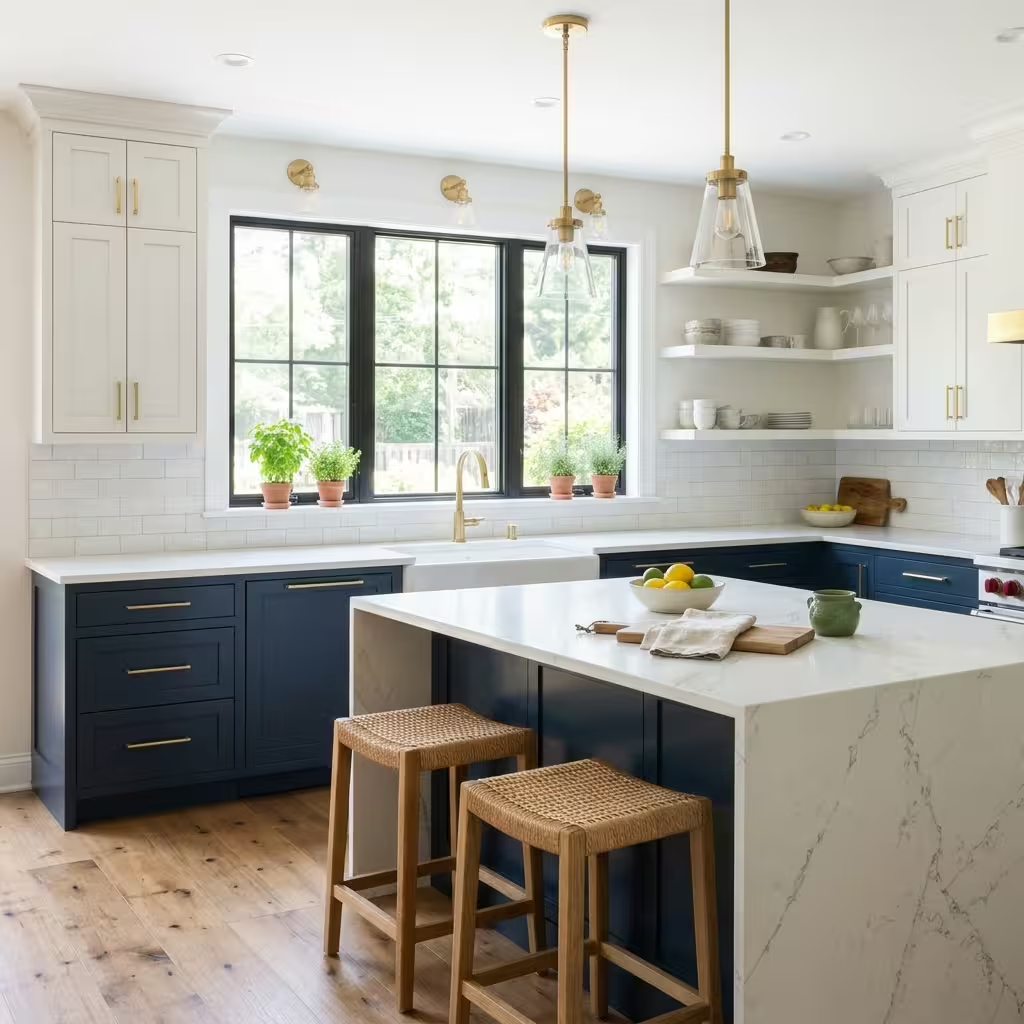
Shaker doors work with many looks, and that flexibility explains why they stay popular. Painted finishes dominate right now. Soft whites, warm greige and deep navy show up in most showrooms we visit. Pair a painted Shaker door with brushed brass or matte black hardware for a modern feel. Go with natural oak or walnut stain if you want a warmer, traditional mood.
Glazed finishes add depth and hide small dings in high-traffic kitchens. Ask for a sample door before you commit. Lighting changes how every color reads, so view the sample in your kitchen at morning, noon and night.
Finally, match your cabinet finish to your countertop and backsplash. Undertones matter more than most people expect, and a quick side-by-side check prevents expensive regrets.
Quick Design Tips for Shaker Kitchens
- Use two tones. A darker island or lower cabinets with lighter wall cabinets adds depth without clutter. Our kitchen cabinet island guide shows how to plan an island that works.
- Let hardware set the style. Simple bar pulls push the look modern, while knobs lean farmhouse.
- Keep the door style consistent. Mixing too many profiles can make a kitchen feel busy.
- Choose one statement. A bold color on one cabinet group works better than color everywhere.
Materials and Construction Tips for Judging Cabinet Quality
Material choice affects both looks and lifespan. Solid hardwood like maple and birch resists dents and paints well, while poplar is softer but paints smoothly. Plywood boxes hold screws securely and resist sagging under heavy loads. MDF doors give a smooth painted surface at a lower price, but they swell when exposed to moisture.
We once inspected a kitchen where MDF doors beside the sink had puffed up within two years. The homeowner replaced them with plywood-backed doors, and the problem never came back. Ask your supplier about the box material, the door material and the drawer box material separately. If you want a deeper comparison, read our guide on MDF vs plywood cabinets.
Then press on the drawer sides and shake the doors gently. Solid construction feels tight and quiet. Loose parts rattle and flex, and that usually signals weak joints.
Does Your Climate Matter?
Yes. In humid regions, such as parts of the Gulf Coast and Southeast, moisture puts more stress on door edges and box bottoms, so plywood boxes and well-sealed finishes are a safer bet. In drier climates the risk is lower, but areas around the sink and dishwasher still need protection.
Choosing Shaker Cabinets for Your Kitchen Layout and Storage Needs
Good cabinets fail when they don’t fit how you cook. Start with your workflow. Place the sink, stove and fridge in a clear triangle, so you move easily between them. Next, count what you store.
Deep drawers beat base cabinets with shelves for pots and pans, because you can see everything at once. Corner cabinets often waste space unless you add a pull-out or lazy Susan.
Consider a pantry tower if your kitchen lacks walk-in storage. For ideas, see our modern pantry cabinet ideas. Wall cabinets should sit at a comfortable height, usually 18 inches above the counter. Measure twice before you order, and leave room for appliance doors to open fully.
Most mistakes happen in the planning stage, not during installation, so spend extra time here. Our kitchen layout ideas can help you test which arrangement fits your room.
Shaker Cabinet Costs in 2027 and What Affects the Price
Shaker cabinets cost less than many people think, but prices vary widely. As a general planning range, stock cabinets often run $100 to $300 per linear foot, while semi-custom options land between $300 and $600. Full custom work costs more and takes longer to deliver. Cabinets commonly make up 25 to 30 percent of a kitchen remodel budget, according to industry estimates. Treat these as starting points and confirm them with current quotes.
Several factors push prices up. Solid wood doors, plywood boxes, soft-close hinges and custom sizes all add cost. Painted finishes usually cost more than natural stain because they require extra coats and sanding.
Installation can add another few thousand dollars depending on your kitchen. Request at least three written quotes, and make sure each one lists the same materials. Comparing unlike quotes leads to bad decisions, and a low bid often hides cheap materials.
Stock vs Semi-Custom vs Custom Shaker Cabinets
| Tier | Sizes | Finish options | Lead time | Best for |
| Stock | Standard sizes only | Limited | Shortest | Tight budgets, quick refreshes |
| Semi-custom | Adjustable sizes and options | Wide | Moderate | Most remodels |
| Custom | Built to measure | Unlimited | Longest | Unusual spaces, premium finishes |
Most homeowners find semi-custom the best balance of fit and price. Our semi-custom cabinets buying guide explains how to compare lines, and our modern kitchen design cost guide shows where cabinets fit in the full budget.
Prices also change by city and state because labor rates, delivery costs and installer availability differ. Always compare local quotes before you set a final budget.
Pros and Cons of Shaker Cabinets
Pros
- Versatile: works in farmhouse, transitional and modern kitchens
- Easy to update: new paint and hardware can change the look
- Simple to clean: the shallow recess is easier to wipe than ornate profiles
- Widely available: most cabinet lines offer them in many finishes
Cons
- Can feel common: the style is popular, so personalization comes from finish and hardware
- Paint shows wear: painted edges can chip in high-traffic areas
- Not ideal for ultra-minimal looks: slab doors suit that style better
- Joints can show gaps: poorly built frames may crack at the corners over time
How to Choose a Qualified Cabinetmaker or Installer
Your installer matters as much as your cabinets. A great door can’t fix crooked walls or poor leveling. Start by checking licenses and insurance, which protect you if something goes wrong.
Then ask for recent references and visit a finished project if you can. Look for portfolios that show close-up photos of joints, corners and drawer alignment. Ask how the installer handles uneven floors and out-of-square walls. A good pro explains the process clearly and answers questions without rushing you.
Watch out for vague timelines and large upfront deposits. Get the warranty in writing, including what it covers and how long it lasts. Trust your gut too. If the team seems disorganized during the quote stage, expect more of the same during installation. To understand how buying channels affect service and price, see our factory-direct vs showroom guide.
Installation, Cleaning and Long-Term Maintenance
Proper installation keeps doors aligned for years. Installers should level each cabinet, secure it to wall studs and fasten adjacent units together before they add countertops. Shims help fix small gaps, but too many shims weaken the box. After installation, adjust hinges so doors sit flush and close evenly.
Clean painted surfaces with a soft cloth, warm water and mild dish soap. Dry them right away, because standing water causes swelling and peeling. Skip abrasive pads and harsh chemicals that dull the finish. Every six months, check hinges, drawer slides and handles, then tighten any loose screws.
Touch up small chips with matching paint before moisture gets underneath. If your painted finish is worn but the cabinets are solid, see our guide on how to paint kitchen cabinets before you replace them. A little routine care protects your investment and keeps your kitchen looking sharp.
Common Shaker Cabinet Mistakes to Avoid
- Choosing a color from a photo. Always view a real sample in your own lighting.
- Comparing quotes with different materials. Make every quote list box, door and drawer materials.
- Ignoring the sink area. Protect moisture-prone cabinets with plywood and sealed edges.
- Skipping the layout check. Test door swings, drawer clearances and appliance openings.
- Forgetting lead time. Order early so your contractor is not waiting on cabinets.
- Mismatching undertones. Compare cabinet, countertop and backsplash together.
Shaker Cabinet Buying Checklist and Questions to Ask Before You Order
Before you sign anything, run through this checklist. Confirm the box and door materials in writing. Verify the joinery type and the hinge brand. Measure your space twice and send the measurements with your order. Ask whether the price includes delivery, handles and installation.
Find out the lead time, and plan around it so your contractor isn’t waiting on cabinets. Request the warranty terms and the return policy. Ask who handles problems after installation, and get a direct phone number. Finally, order a sample door and check it in your actual lighting.
If you are planning a larger project, our kitchen remodel planning guide walks through the timeline, and a 3D home design review can catch layout mistakes before you order.
Taking these steps now saves time, money and frustration later.
Conclusion
Shaker cabinets work for almost any kitchen, but the best results come from careful choices. Check the materials, study the joinery and plan your layout before you order. Get written quotes that compare the same specs.Then trust a licensed installer who can show you past work.