
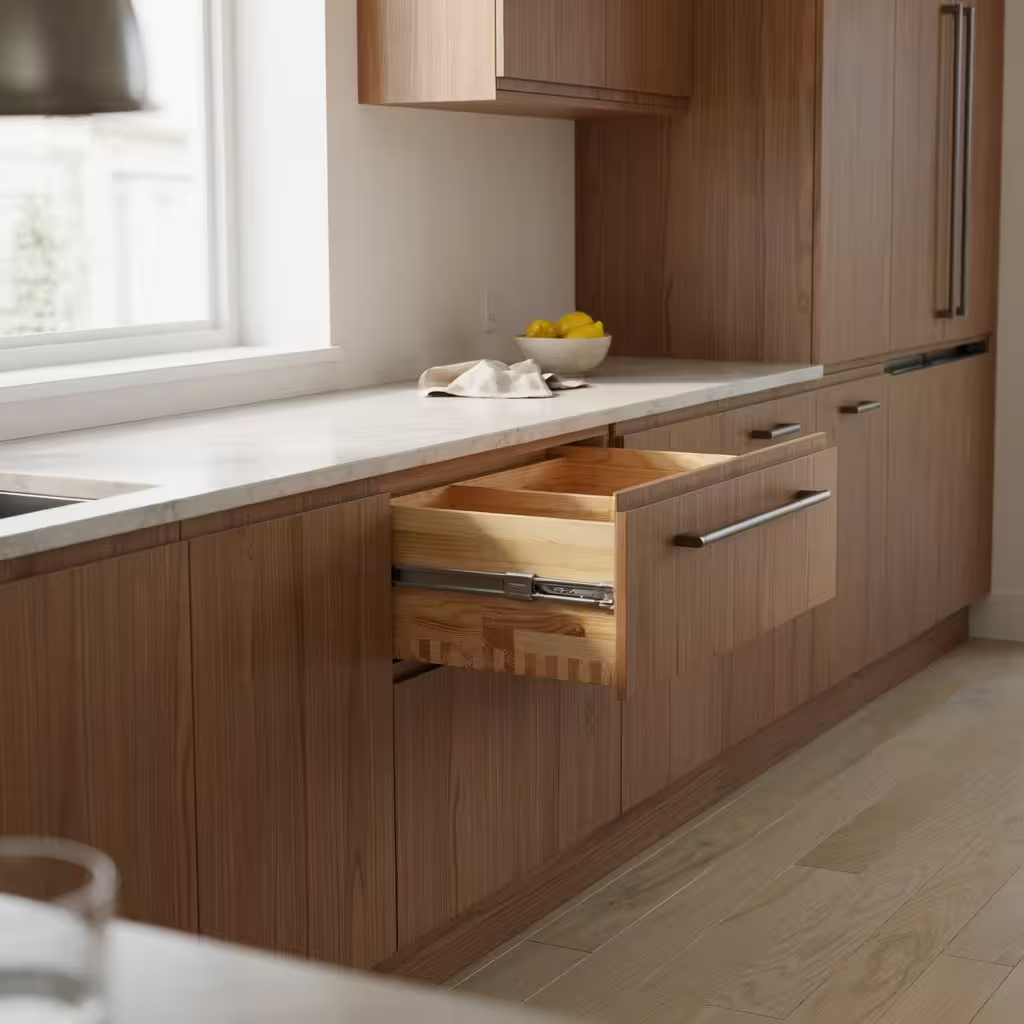
Thinking about putting solid wood in your kitchen during 2026 is like bringing a paper umbrella to a hurricane.
You want a kitchen that survives chaotic cooking, not a fragile heirloom that cries every time water touches it. Welcome to the Casa Direct Laminate Kitchen Cabinets Pros and Cons Guide for 2026.
We skip the generic sales pitches and dive straight into raw technical realities.
Whether you plan to install High Pressure Laminate or basic melamine, this deep dive gives you the unvarnished engineering specs so you can buy like a seasoned joinery architect.
Pros of Laminate Kitchen Cabinets
· Easy to Clean and Daily Maintenance
High-pressure laminate surfaces use a non-porous melamine overlay that rejects grease, oil, and acidic liquid absorption.
Unlike natural wood, which contains open-grain cellular networks requiring periodic polyurethane or oil treatments, laminate surfaces remain completely nonreactive to standard household cleaners.
You can sanitise doors using isopropyl alcohol or mild soaps without dulling the decorative paper layer beneath.
Microfiber towels remove surface dirt quickly without pushing grit into microscopic pores.
The outer resin skin resists staining from coffee, wine, and citrus juices during long exposures. Maintenance demands no specialised oil coatings, reducing long-term upkeep labour to basic wiping.
· Cost-Effective Compared to Solid Wood
Solid hardwood cabinet doors require extensive milling, seasoning, and manual jointing that inflates raw fabrication costs.
Laminate construction relies on engineered wood core substrates like high-density fiberboard or industrial-grade particleboard covered with thin thermosetting decorative sheets.
Fabrication shops process these flat panels on high-speed computer numerical control machinery, cutting labour overhead by more than fifty per cent.
Material yields remain high because manufactured sheets do not possess knots, grain flaws, or warping defects common in raw timber stock.
You secure superior dimensional stability and structural mass for a fraction of solid oak or walnut pricing without sacrificing structural rigidity.
· Durable Finishes Designed for High-Use Kitchens
Engineers manufacture High Pressure Laminate by fusing multiple layers of phenolic resin-impregnated kraft paper under pressures exceeding 1,000 pounds per square inch at temperatures around 150 degrees Celsius.
This thermosetting reaction converts separate paper sheets into a single solid thermoset plastic structure.
The resulting surface easily passes rigorous ANSI and NEMA LD3 wear resistance benchmarks, handling daily utensil impacts and abrasion from heavy pans.
Unlike painted finishes that chip when struck by cookware, the dense melamine overlay absorbs mechanical shocks without flaking.
High-traffic residential kitchens benefit directly from this scratch-resistant resin barrier during aggressive everyday usage.
· Consistent Colors and Repeatable Style Options
Natural timber exhibits natural grain variations, sapwood colour shifts, and unpredictable knot patterns that complicate large cabinet runs. Decorative laminate sheets use advanced industrial rotogravure and digital printing presses that maintain strict delta E colour tolerances across production lots.
If a cabinet door suffers damage five years after installation, you can order a replacement panel with exact visual uniformity.
Manufacturer colour catalogues offer exact digital grain matching and flat architectural tones that stay uniform across dozens of door faces.
· Variety of Finishes That Match Any Interior
Pressing plates used during laminate manufacturing transfer sophisticated tactile surface textures directly into the curing resin overlay.
You can select super matte finishes engineered with low light reflectivity that naturally repel finger oils, or synchronised textures where wood grain ridges align perfectly with printed visual patterns.
Modern catalogue choices extend to realistic reproductions of architectural concrete, brushed metallic alloys, and natural honed marble. These specialised surfaces give design professionals endless texture options while retaining the chemical resistance and structural durability of standard High Pressure Laminate.
You obtain high-end architectural aesthetics without paying premium prices for delicate raw materials.
Cons of Laminate Kitchen Cabinets
· Edge Damage Can Expose the Core
Laminate panels require edge banding strips to cover the raw interior substrate along every cut panel boundary.
High-impact hits on door corners can shear off these edge strips or crack the thin outer surface layer. Once an edge band separates, the underlying medium density fiberboard or particleboard core sits fully exposed to atmospheric conditions.
Liquid spills can quickly enter through small perimeter cracks, triggering localised swelling inside the cellulose fibres of the core board.
Standard ethylene vinyl acetate hot melt adhesives can fail under mechanical impact, making high-quality polyurethane adhesive edge banding mandatory for vulnerable high-contact-zone edges.
· Limited Ability to Resurface or Refinish
Solid wood doors allow repeated sanding, staining, and varnishing to repair deep scratches or alter cabinet colours over time.
Laminate surfaces have a decorative layer that is only a fraction of a millimetre thick.
Attempting to sand out a deep gouge burns through the clear overlay and decorative paper, permanently exposing the dark brown phenolic kraft paper core beneath.
You cannot apply traditional wood stains or standard acrylic paints directly onto non-porous melamine resins without risking adhesion failure. When severe structural gouges or deep burn marks occur, complete door or drawer front replacement remains your only restoration path.
· Heat and Moisture Risks Near Sinks and Appliances
Exposing laminate panels to constant temperatures above sixty degrees Celsius weakens adhesive bond lines holding the surface sheet to the substrate.
Steam emissions from countertop kettles, dishwashers, and self-cleaning ovens break down standard contact cements over time, causing localised bubbling or panel delamination.
Near sink units, standing water can pool along bottom door edges, penetrating microscopic seams in the edge tape.
Once moisture reaches the internal wood core, the board undergoes irreversible swelling, pushing the face laminate outward and ruining door alignment.
Installing heat deflectors and sealing every plumbing cutout remains essential for preserving cabinet structural integrity.
· Lower Long-Term Value Compared to Premium Materials
Home buyers and property appraisers classify laminate joinery below solid hardwood, natural stone, or high-grade architectural metalwork.
While premium High-Pressure Laminate offers outstanding operational performance for fifteen to twenty years, secondary housing markets penalise synthetic surfaces during high-end property valuations
Solid wood cabinetry offers multi-generational lifespans because future owners can refinish the wood to match modern interior trends.
Laminate cabinets cannot undergo colour transformation or structural refinishing, forcing complete cabinet replacement when styles change.
Homeowners prioritising maximum real estate equity appreciation often select real timber despite the higher initial outlay and increased maintenance demands.
Conclusion
Laminate kitchen cabinets deliver unmatched daily durability, stain resistance, and precise design choices without breaking your renovation budget.
Protecting edge seams and shielding panels from high heat ensures long-term performance.
Casa Direct equips homeowners and professional builders with hard technical facts to choose superior joinery.
Make smart, informed material decisions today for a kitchen built to endure daily life.