
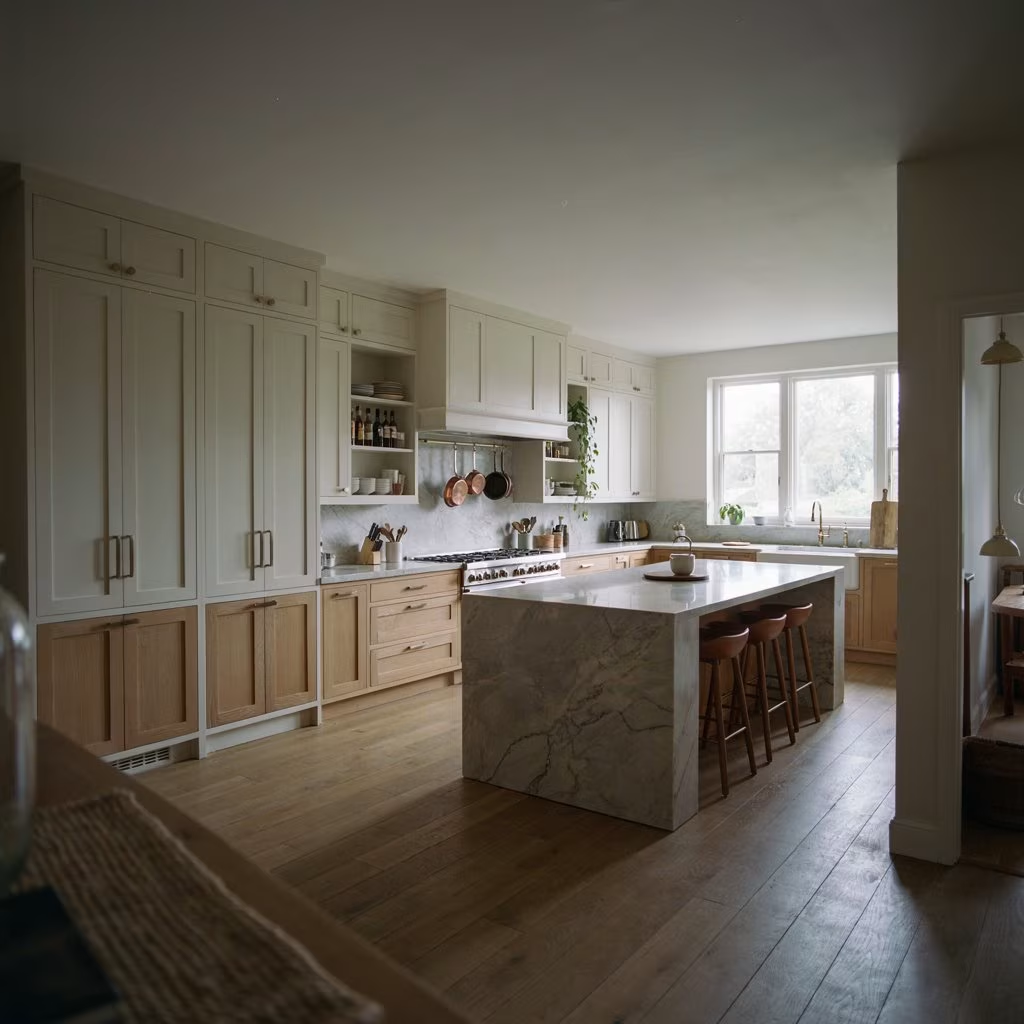
Buying cabinets without a plan is like buying a used car blindfolded. You expect a sleek, smooth ride, but you end up with plastic parts and a loose engine block. Most homeowners fall into this exact trap.
They pick pretty colors off Pinterest, ignore box engineering, and then wonder why their cabinet doors drop off the hinges within two years. Casa Direct built this guide to stop you from throwing thousands of dollars down the drain.
You need real technical knowledge before you spend a single dime on kitchen storage. Stock cabinets trap you in rigid three-inch steps.
Custom units burn a massive hole in your bank account. Semi-custom boxes give you the exact structural sweet spot.
You get modified depths, custom widths, and heavy duty wood options without custom price gouging. Grab your tape measure and get ready to talk real specs.
Semi-Custom Cabinets Explained How They Differ from Stock and Custom
Stock cabinets come straight off an assembly line in pre-built three-inch increments. You cannot adjust their depth, height, or box material. If your kitchen wall measures ninety five inches, stock boxes leave you with awkward gaps that demand thick fillers.
Custom cabinets solve that issue, but local cabinetmakers build every piece from scratch. That labor skyrockets your bill and stretches timelines out to three months. Semi-custom cabinets strike the exact middle ground.
Factories build semi-custom boxes on automated assembly lines using standard chassis sizes, but they let workers alter specs. You can trim cabinet depth by two inches, increase wall box height, or order custom paint colors.
Manufacturers modify factory order sheets directly, keeping precision high and costs low.
You gain custom dimensions while maintaining industrial manufacturing standards and tight quality control. Casa Direct recommends this option when you want precision fits without custom labor fees.
Choosing Materials and Finishes A Technical Checklist for Homeowners
Never let a salesperson pitch cheap particleboard as high density furniture board. Particleboard absorbs water, swells like a sponge, and fails under heavy quartz countertops. Demand half inch or three-quarter-inch furniture-grade plywood for box construction.
Plywood uses cross laminated wood veneers bonded with waterproof glues, giving you superior screw-holding strength. Solid hardwood works best for face frames and drawer fronts.
Hard maple offers dense grain that takes paint smoothly without visible grain bleed. Cherry and red oak bring rich natural grain patterns for stained finishes.
High-density fiberboard core works well for painted center panels because wood moves with humidity while fiberboard stays flat. Demand multi-layer conversion varnish or UV-cured factory finishes instead of basic acrylic paint.
Factory cured coatings resist grease, heat, and harsh cleaning chemicals.Cheap air dried paints chip away within six months of daily cooktop splatter. For homeowners considering painted cabinetry How to Paint Kitchen Cabinets provides additional guidance on cabinet finishes.
Door Styles and Construction Options What to Compare in Specs
Cabinet construction dictates long term strength and overall visual lines. Framed cabinets feature a solid wood perimeter frame attached to the front of the box.
That frame adds rigid support and allows for traditional full overlay, partial overlay, or inset doors. Inset doors fit flush inside the face frame, requiring tight factory tolerances and precise hinge adjustments.Homeowners comparing cabinet door profiles can also review Shaker vs Slab Cabinets for another useful comparison.
Frameless European style cabinets eliminate the face frame entirely. You get full access to the cabinet interior and wider drawer space, but the plywood box walls must measure a full three quarter inch to carry structural loads.
Drawer box joinery reveals true craftsmanship. Reject stapled butt joints immediately. Demand five piece solid hardwood drawer boxes with real dovetail joints.
Dovetail fingers interlock tightly and resist pulling apart under heavy cast iron cookware. Pair those drawers with solid wood stiles and rails joined by deep mortise and tenon joints for maximum structural integrity.
Sizing and Layout Planning Avoiding Costly Rework During Installation
Amateur layout planning creates installation nightmares. No room contains perfectly square corners, flat floors, or plumb walls. A wall that bows out by half an inch ruins a continuous run of upper cabinets.
You must account for real site conditions during layout design. Semi custom manufacturers offer factory extended stiles and scribe margins.
An extra three quarter inch of wood on the cabinet edge allows installers to trim the frame to match uneven drywall without ruining door clearances.
Keep three inches of filler space between corner cabinets and appliance doors so handles do not slam into adjacent panels. Verify plumbing rough-in heights and electrical outlet placements before finalizing box widths. For additional planning considerations, see these kitchen layout ideas
A sink base cabinet centered on a window will fail if the drain pipe hits a structural box divider inside. Casa Direct always double checks laser measurements and wall plumb lines before submitting production orders.
Hardware Selection Hinges, Slides, and Pulls Performance and Longevity
Cheap cabinet hardware ruins good cabinetry. Never settle for side mounted roller slides or friction hinges. Side slides leave metal tracks exposed, wobble under weight, and reduce drawer opening width. Demand full extension undermount drawer glides with integrated soft close dampeners.
Undermount glides hide beneath the drawer box, support up to one hundred pounds of heavy active load, and pull open completely for full access. Soft close mechanisms prevent slamming, protecting cabinet joints from impact damage over time.
Specify six way adjustable concealed hinges with at least one hundred ten degrees of opening swing. Six way adjustment allows installers to align door reveals horizontally, vertically, and in depth with turn screws. Choose solid forged brass or grade 304 stainless steel handles and pulls.
Zinc alloy hardware chips quickly under ring scratches and hand oils. Demand commercial grade hardware specs that withstand thousands of operational cycles without sagging.
Budget Planning and Cost Drivers What Changes Price the Most?
Understanding cost drivers prevents budget overruns. Cabinet prices fluctuate based on material upgrades, door designs, and specialized finish processes.
A standard painted shaker door costs significantly less than a raised panel door with hand applied glazes or distressed distressing techniques.
Wood species also drive pricing tiers. Paint grade maple or birch sits at the baseline, while cherry, walnut, and quartersawn white oak push material costs up forty percent.
Dimension modifications add factory labor fees. Altering cabinet depth or adding custom prep cutouts costs extra per box. Interior storage accessories spike totals fast.
Adding trash pullouts, spice racks, and lazy susans inside factory cabinets increases convenience, but every metal accessory adds to the invoice. Balance your budget by investing in plywood box construction and premium drawer glides first.
Save money by choosing simple door profiles and standard finish palettes. Casa Direct helps you allocate funds where structural performance matters most. Homeowners planning a larger renovation can also use this kitchen remodel planning guide to organize the project before ordering.
Installation and Warranty Requirements or Peace of Mind
Even top-tier semi-custom cabinets fail when installed improperly or backed by weak warranties. Demand cabinets certified by the Kitchen Cabinet Manufacturers Association. That KCMA seal guarantees boxes passed rigorous testing for weight loads, door hinge durability, drawer slide cycles, and finish chemical resistance.
Review the manufacturer warranty closely before signing off. Look for lifetime limited warranties covering drawer glides, hinges, and box structural integrity against manufacturing defects. Avoid brands offering short one year warranties or excluding finish peeling under normal humidity.
Installation requires absolute precision. Installers must anchor base cabinets to wall studs with heavy duty cabinet screws, not drywall anchors or finish nails. The floor must be leveled using cedar shims beneath base boxes to prevent frame twisting.
Twisting racks the box, misaligns doors, and causes drawer glides to bind. Casa Direct mandates certified professional installation to preserve manufacturer warranty protection.
What to Expect from Start to Finish in the Ordering Process Timeline and Quality Checks
Ordering semi custom cabinets follows a strict production sequence that takes four to eight weeks. The process starts with site measurements and 3D layout engineering.. A properly planned 3D home design can help identify layout problems before production begins.
Once you approve shop drawings and door finish samples, factory production begins. Lumber selection, panel cutting, box assembly, and multi stage finish curing occur during weeks two through five.
Quality control inspectors test door squareness, finish consistency, and hardware operation before packing. Freight delivery arrives in protective crates.
Inspect every box immediately upon delivery. Check outer cartons for freight damage and unbox cabinet doors to verify finish consistency across batches.
Report any chipped corners or shipping damage within forty eight hours. Casa Direct guides homeowners through every phase, ensuring shop drawings match jobsite conditions before factory release.
Ready to build your dream kitchen with commercial grade precision? Contact Casa Direct today to review semi custom specs and receive a custom estimate.
Key Takeaways
Glorifying your kitchen requires smart choices instead of expensive mistakes. Semi custom cabinets offer custom style, tailored sizes, and heavy duty plywood frames at a fair price.
Casa Direct delivers precision craftsmanship and expert guidance.
Contact our team now to order your dream cabinets today.