
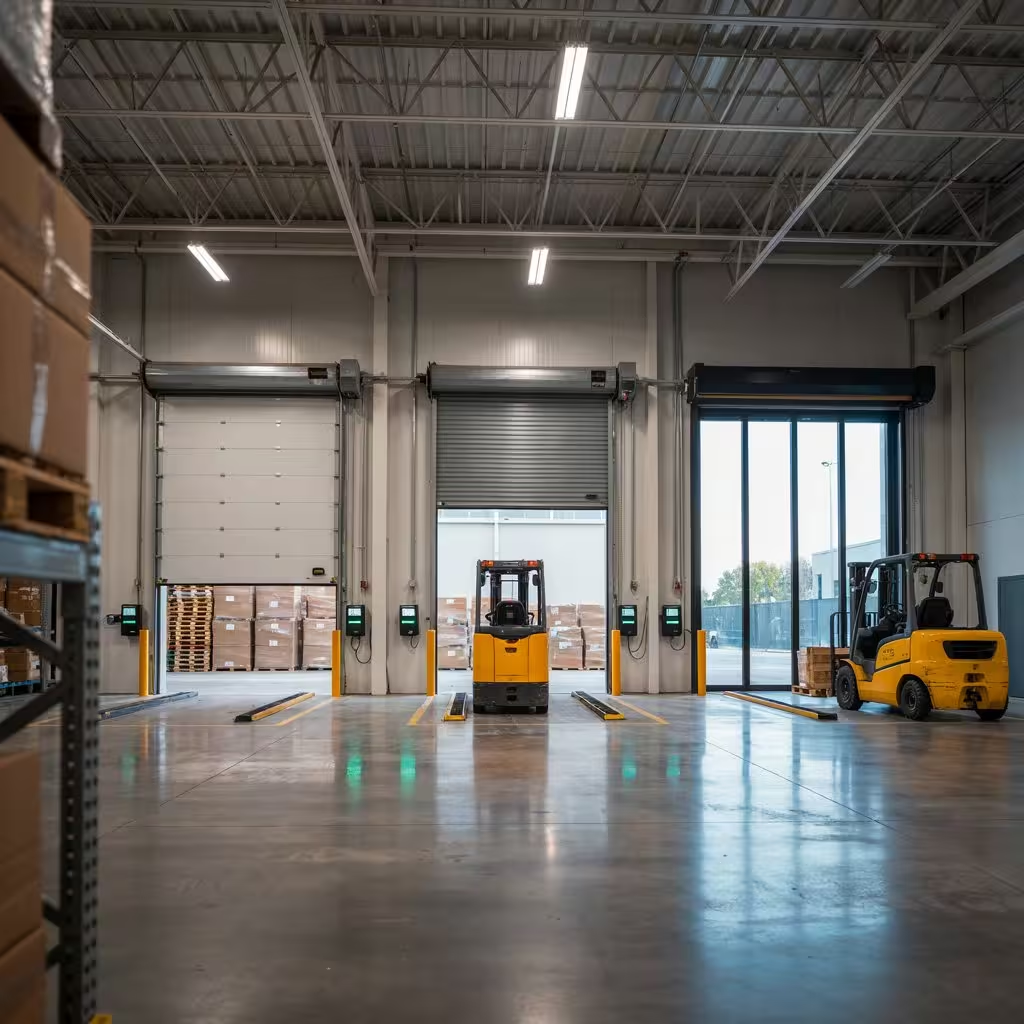
Nobody thinks about a commercial garage door until it stops moving, and it always picks the worst possible moment to quit. A dock door jammed at 6 AM with three trucks backed up in the yard. A dent shaped exactly like a forklift fork that nobody wants to explain to the insurance adjuster.
A tenant asking why the electric bill jumped again in July. Commercial garage doors are the most overworked, underappreciated piece of equipment in any warehouse, distribution center, or retail back room, and 2026 is finally giving them the attention they deserve.
Facility managers stopped treating garage doors as an afterthought bolted onto the building. Insurance carriers, energy codes, and security auditors made sure of that.
This piece breaks down the five trends actually moving commercial garage doors forward this year, along with the regulatory pressure points that turn a routine door upgrade into a compliance headache if ignored. Read it like a technical brief, not a listicle. Your dock doors have earned better than fluff.
Top Five Commercial Garage Door Trends Shaping Modern Facilities
Five shifts are reshaping how commercial buildings spec, install, and manage overhead doors in 2026.
Facility owners are pairing smart controls with predictive maintenance, pushing insulation ratings higher to fight rising energy codes, adding glass for daylight and storefront appeal, chasing speed to cut dock delays, and reinforcing steel for security and wind load compliance.
Each trend below solves a specific operating problem instead of chasing a buzzword.
| Smart control systems | Remote monitoring, fewer service calls |
| High R value panels | Lower heating and cooling costs |
| Full view glass panels | Daylight, storefront visibility |
| High speed roll up doors | Faster cycle times, less air exchange |
| Reinforced steel doors | Impact resistance, wind load compliance |
Pick the trend that matches your building’s biggest cost driver first. A cold storage facility gains more from a high speed door than from glass panels.
A retail storefront gains more from glass than from reinforced steel. Match the door to the job, then layer in the rest as budget allows.
Smart Control Systems Transform Modern Industrial Overhead Openers
A smart controller turns a commercial garage door into a piece of connected equipment instead of a switch on the wall. Facility teams now get cycle counts, motor temperature readings, and open and close logs sent straight to a phone or a building management dashboard.
That data catches a failing gear motor weeks before it strands a loading dock, cutting emergency service calls and the overtime that comes with them.
Regulators caught up to this trend already. UL 325 was rewritten in 2016 and 2017 specifically to cover internet-connected garage door operators, adding rules around unattended activation and remote commands.
Any smart opener installed on a commercial garage door now needs entrapment protection that still works when the command comes from an app instead of a wall button. Skip that requirement and an insurance adjuster will find it during the next claim review.
Pair smart controls with an actual maintenance schedule, not just an app. Sensor data only earns its keep when someone acts on it.
High R Value Polyurethane Panels Cut Facility Energy Loss
R value measures how well a door panel resists heat flow, and it affects your heating and cooling bill more than almost any other spec on a commercial garage door. Non insulated steel doors sit near R 0 to R 3.
Polyurethane injected panels used on modern commercial garage doors typically land between R 16 and R 20, with premium products pushing past R 25.
One catch every technical buyer should know. A published R value measures the center of the panel, not the whole door system. Joints, window cutouts, and perimeter seals all leak heat, so a door rated at R 18 often performs closer to R 10 or R 12 once installed.
Ask any manufacturer for the whole door thermal performance number, not just the panel rating, before signing off on a spec sheet.
| Non insulated steel | R 0 to R 3 |
| Basic polystyrene core | R 6 to R 9 |
| Polyurethane injected | R 16 to R 20 |
| Premium polyurethane | R 20 to R 27 |
Facilities in colder climates or with attached conditioned space should target the top of that range.
ASHRAE 90.1 energy code requirements push commercial projects toward higher door insulation with every code cycle, and the next revision will tighten it further.
Full View Glass Panels Merge Contemporary Design with Lighting
Full view glass panels replace solid steel sections with tempered or laminated glass set in an aluminum frame, giving a commercial garage door the look of a storefront window instead of a warehouse wall. Automotive showrooms, breweries, gyms, and retail loading areas use them to pull natural light deep into a space that used to depend entirely on overhead fixtures.
The lighting benefit is measurable, not just aesthetic.
Buildings that swap solid panels for glass in customer-facing bays cut daytime lighting load in that zone and can qualify for LEED daylight credits under Indoor Environmental Quality categories, since the credit rewards glazing that lets occupants see and use natural light in regularly occupied spaces.
Glass comes with trade-offs a technical buyer needs to weigh before signing a purchase order.
Insulation drops compared to a solid polyurethane panel, tempered glass costs more to replace after an impact, and break-in risk rises in high-crime areas without a secondary grille behind it.
Specify laminated safety glass and a lockable interior track for any glass commercial garage door in a ground-floor or street-facing bay. Skip the grille, and you are gambling with every storefront panel you installed.
High Speed Roll Up Systems Boost Commercial Warehouse Flow
Speed is the whole point of this door category. A standard commercial garage door closes at roughly 6 to 8 inches per second.
High-speed roll-up doors move at 24 to 100 inches per second, and some fabric and rigid models on the market now reach 125 inches per second.
That gap changes real operating numbers. Every extra second a dock door sits open lets conditioned air escape and lets dust, insects, or forklift exhaust drift into the building.
Multiply that by a few hundred cycles a day across a distribution center and the energy loss adds up fast, along with the wear on HVAC equipment working overtime to compensate.
| Standard commercial door | 6 to 8 inches per second |
| High speed roll up door | 24 to 100 inches per second |
| Rigid or fabric high speed | Up to 125 inches per second |
Most high speed doors also use a breakaway curtain or panel that pops free on forklift impact and resets without a service call.
Cycle life on these systems commonly runs 300,000 to over 1,000,000 open and close cycles, which matters in a facility running two or three shifts a day.
Reinforced Steel Doors Deliver Premium Security for Warehouses
Reinforced steel remains the standard for any commercial garage door protecting inventory, equipment, or a loading dock in a high crime or high wind area.
Heavier gauge steel skins, welded reinforcing struts, and multi point locking bars resist prying, ramming, and the kind of forced entry attempt that a thin aluminum panel simply cannot stop.
Wind load compliance is not optional in most jurisdictions, and it gets tested under ANSI/DASMA 108, the industry standard referenced by roughly 95 percent of sectional commercial garage doors sold in the United States.
The test pushes a door to both positive and negative pressure, holding it at design pressure for 10 seconds and then at one and a half times that pressure for another 10 seconds.
A door that fails this test in a coastal or tornado prone region is a liability claim waiting to happen, not a maintenance issue.
Facility managers in hurricane and high wind zones should request the manufacturer’s wind load label on every reinforced door and keep a copy on file.
Local code officials ask for it during inspection, and skipping that step delays your occupancy permit.
How Smart Monitoring Technology Secures Commercial Access Points
Smart monitoring covers the sensors, cameras, and access credentials layered onto a commercial garage door after the door itself gets installed.
Cloud based access control adoption in commercial buildings jumped past 60 percent of organizations by 2024, up from under 35 percent five years earlier, and that shift keeps accelerating through 2026 as legacy wired panels reach end of life.
A monitored commercial garage door logs every open event, ties it to a credential or a license plate, and flags anything outside normal hours for a security team to review.
That audit trail matters during an insurance claim, a theft investigation, or a workplace incident, since it replaces guesswork with a timestamped record.
Cyber hardening deserves the same attention as the physical door itself. A connected opener is a network device, and network devices need patching, credential rotation, and separation from the rest of the building network.
A door nobody bothers to update becomes the easiest way into a facility, no crowbar required.
Choosing Sustainable Components for Industrial Roll Up Doors
Sustainable components on an industrial roll-up door start with the steel. Steel ranks among the most recycled materials on the planet, and commercial door manufacturers now build panels with recycled content ranging from roughly 25 percent up to 80 percent depending on the product line and supplier.
That recycled content counts toward LEED Materials and Resources credits, provided the combined post-consumer content plus half the pre-consumer content reaches at least 20 percent of total material cost on the project.
Low VOC coatings add another point worth chasing, cutting indoor air quality complaints and qualifying for additional credits on new construction work.
Doors and hardware typically make up less than 2 percent of a building’s total material cost, but a well-specified commercial garage door still delivers real points toward certification along with decades of service life.
Ask manufacturers for an Environmental Product Declaration before finalizing a sustainable door package. It documents the full lifecycle impact instead of a marketing claim, and code officials increasingly expect one on file during commercial permit review.
Every trend above solves a real operating problem, not a design choice picked for looks alone.
Casa Direct Usa helps facility managers choose commercial garage doors that meet code, hold up under daily abuse, and lower the utility bill instead of raising it.
Bring your building specs and your local wind and fire code requirements, and get a door spec that clears inspection on the first try.
Final Word
Commercial garage doors do more work than any other opening in a facility, and 2026 raises the bar higher.
Smart controls, high R-value panels, glass, speed, and reinforced steel each solve a different cost or safety problem. Match the door to the job, meet the code requirements, and it earns back its cost fast.